- Welcome to Dogs Of War Vu.

Cry Havoc! And let slip the dogs of war!

Recent posts
#41
World War II Europe 1939-1945 / Re: Retirement Finally Happene...
Last post by Kemmo - September 08, 2026, 03:46:59 PMI still go back to playing Middle East wars a lot,so an upgrade would be nice.
#42
Games Discussion / Re: TFC2: The Fertile Crescent...
Last post by Asid - September 08, 2026, 12:01:52 AMUpdate v.0475
Sun, September 6, 2026
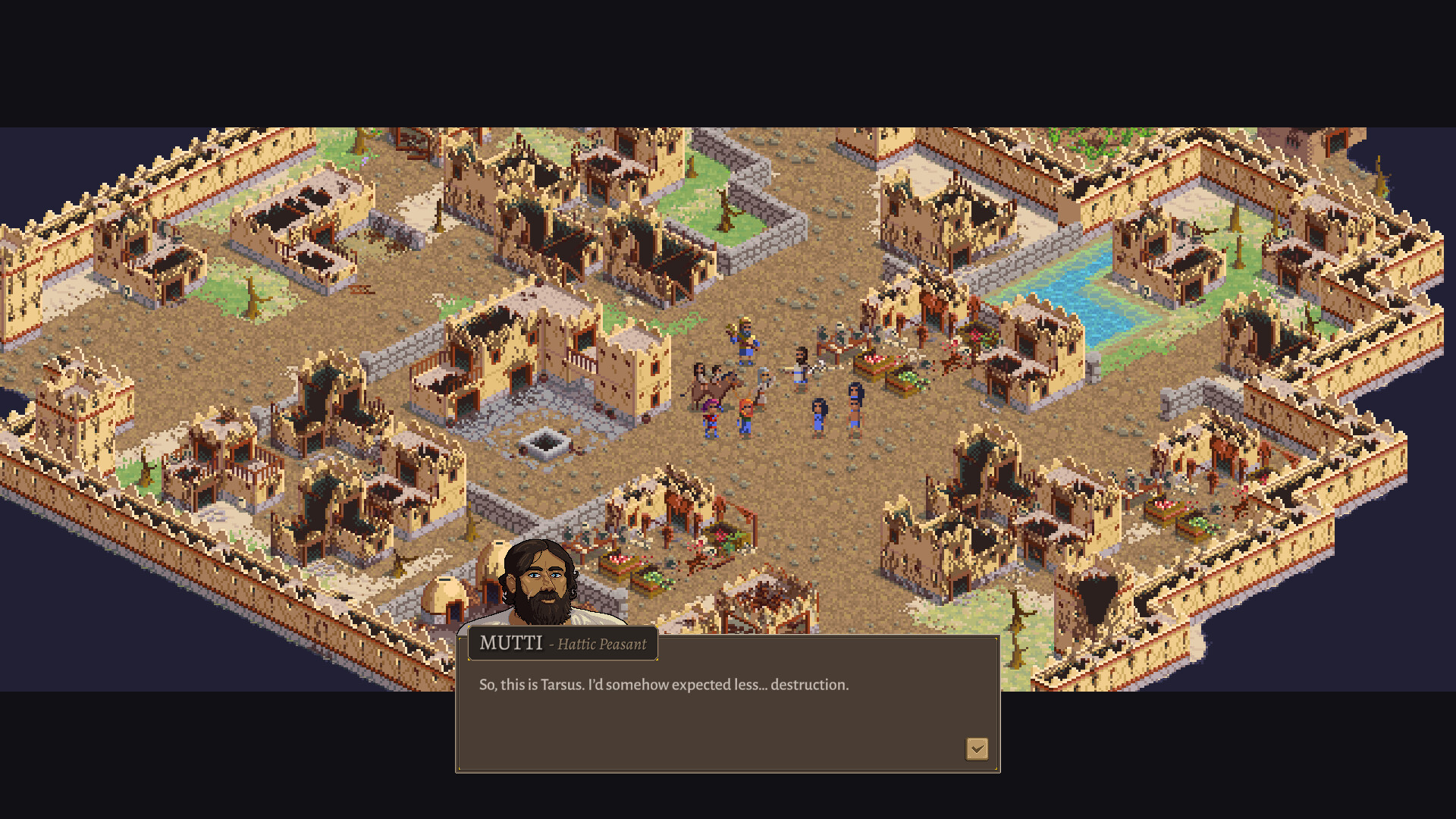
Balance changes and minor bug fixes
Balance
Bugs
Sun, September 6, 2026
Balance changes and minor bug fixes
Balance
- Sapper has 7 move speed (from 6)
- Sapper costs 25 food and 25 wood (from 25 food and 35 wood) Dev notes: we are making the sapper slightly cheaper to train because the wood cost felt high, and the cheaper price reflects the specialized role. With this change, sapper has meaningfully more hitpoints for its cost compared to Heavy Axeman and Line Crusher, who deal the most siege damage out of any non-siege units in the game.
- Hittite Heavy Axeman has 170 health (from 190)
- Dev notes: these were too strong compared to the cost of Babylonian Linecrusher, and the Body Armour upgrade makes them a late-game power house, so we're adjusting hit points to balance it out. It also further differentiates it from Hittite Swordsman as a damage dealer rather than a tank.
- Babylonian Line Crusher deals 5 siege damage (from 6)
Bugs
- Light Axeman is included in description of which units Bronze Shield applies to
- Equipment produced notification plays sound
- Removed attack impact effect at bottom of unit attacking that was playing by fault
#43
Games Discussion / Re: Exanima : 3D isometric RPG...
Last post by Asid - September 08, 2026, 12:01:31 AMCoffee Diary - September 2026
Mon, September 7, 2026

Hey Exanimates,
We recently released an update which added some pretty big new features including a save system.
This did include some small content updates, but there won't be large content additions until version 1.0. As we expected, this update wasn't well received by everyone. Some of the people who wanted a "save system" really wanted a zero friction savescum simulator. We've seen too many games utterly ruined by developers giving in to these kind of demands. We put a lot of effort into this admittedly complex design, we gave our reasons, it takes a lot of things to craft a specific experience and atmosphere. Discovery, mystery, tension and player ingenuity are core to Exanima's. We're not going to abandon that and try to appeal to everyone. At some point you have to accept and respect that. As long as you understand and value the spirit of the game, this update had some impactful additions and indeed a way to permanently save your progress late into the game, which at this point was warranted.
There's a lot going on right now, but only so much we can talk about. There's a few reasons we might not want to go into details of what we're working on, sometimes it's because it implies heavy spoilers, and sometimes it's about managing hype and expectations for features that may still be a long way away, or may never see the light of day. We attempt a lot of unprecedented and complex things and often this means we don't know what difficulties we'll run into until we're quite far along. Games usually build on the mistakes and successes of past games, but we're on a whole different path. One thing we've learned is that players don't generally know or care why doing something different should carry trade-offs. The best of every world with no compromises is kind of the default expectation. New things just aren't well received unless they're in a very polished state and there's very little compromise. With something new and unproven this is a very tall order.
Sometimes we just need time to explore new ideas and approaches, and we don't know what we can actually deliver. We've tried to be very open about what we're exploring to get early feedback, but plans and priorities change and we've grown cautious as people tend to build unrealistic expectations and are dismissive of the many difficulties and compromises that besiege every detail. We're constantly learning to navigate the labyrinth of implications, and the more we learn it only gets more complex. These are not things we can really expect people to understand. What we can say is that we're not embarking on some new side-quest and changing our plans, we're just figuring out how some things might work and what it means for our development process.
All that said, we can talk about some things that may still be a while away, but hopefully with that preface you can meet it with some understanding. Some of this will take time to develop and is subject to change. Recently we've redoubled our efforts to finalise the design of the alchemy and dye systems. While there's still details to figure out, we think we've established enough that we can talk about it and also move forward with its development.
We have been gradually building functional features to support these things, like showing liquids inside bottles, 3D item previews, procedural item features and interaction mechanics etc., but the biggest challenge we've faced and what prevents us from putting it together is that of design and world building. We take a lot of care in creating a cohesive and believable world, and we strive for depth while trying to rein in complexity. We carefully avoid heavily abstracted gamey interfaces and interactions. Alchemy and dyes are very complex things in the real world, we want something that is simple and accessible to players while still feeling realistic and logical within the setting.
We've done a huge amount of research into all this and even hired a chemistry expert consultant. There are endless cool details in the real world that could be used to add depth to our world and these systems, but they're incredibly varied and intricate so they don't translate easily, if at all. We can't have players managing hundreds of unique ingredients with varied effects and elaborate lengthy processes for their use. Going too far in the other direction though abandons all realism, and you have something that feels very gamey and not at all convincing. The same goes for what you can make (and find), we want a relatively small, but meaningful number of items and recipes.
A lot of the work here has been coming up with all the possible alchemical products, recipes, dye colours, ingredients, sources of ingredients, their value, process of refinement, production and application and so on. Coming up with lore friendly names for all of these is also very difficult, and how they all fit within the world in a way that is believable, yet not overwhelmingly complex.
The alchemical effects are not fantastical and flashy, alchemy is the "medieval forerunner of chemistry" and we're sticking to mostly subtle or realistic effects. These include things like antibacterial agents that can aid healing (don't think healing potion!), psychoactive compounds with various effects, pain killers, poisons and antidotes and even different types of explosives, among other things. Dyes and related products would also be something you can make with alchemy.
To avoid having a huge number of dyes, but still a varied and versatile colour palette, we will give dyes some parameters you can adjust when applying them. You might make a colour more or less intense, darker or brighter. There will be some typically rarer dyes that allow for more intense colours. Additionally, some extra products like fixatives will allow applying strong colours to materials that can't otherwise be easily dyed, or give different finishes.
Eventually we also plan to have an alchemy skill, among other "utility" skills. Unlike the current skills, these would advance through practice. The idea is that what you're able to reliably produce, and also the quality of it is based on your skill. Alchemical equipment that you carry or is in your immediate vicinity would provide bonuses. Recipes can be learned from written or other sources, or through experimentation.
Everything is based on the real world, obviously we have to take liberties to make it game friendly. Even if you don't know the real world parallels, taking inspiration from the real world is always the best way to make something feel realistic, plausible and give it a depth that goes beyond what can generally be imagined. We need to have all these details figured out before we start building game systems and adding content to the game, but once the most important things are defined we should be able to flesh out the features and add items somewhat incrementally.
Best,
Bare Mettle
Mon, September 7, 2026
Hey Exanimates,
We recently released an update which added some pretty big new features including a save system.
This did include some small content updates, but there won't be large content additions until version 1.0. As we expected, this update wasn't well received by everyone. Some of the people who wanted a "save system" really wanted a zero friction savescum simulator. We've seen too many games utterly ruined by developers giving in to these kind of demands. We put a lot of effort into this admittedly complex design, we gave our reasons, it takes a lot of things to craft a specific experience and atmosphere. Discovery, mystery, tension and player ingenuity are core to Exanima's. We're not going to abandon that and try to appeal to everyone. At some point you have to accept and respect that. As long as you understand and value the spirit of the game, this update had some impactful additions and indeed a way to permanently save your progress late into the game, which at this point was warranted.
There's a lot going on right now, but only so much we can talk about. There's a few reasons we might not want to go into details of what we're working on, sometimes it's because it implies heavy spoilers, and sometimes it's about managing hype and expectations for features that may still be a long way away, or may never see the light of day. We attempt a lot of unprecedented and complex things and often this means we don't know what difficulties we'll run into until we're quite far along. Games usually build on the mistakes and successes of past games, but we're on a whole different path. One thing we've learned is that players don't generally know or care why doing something different should carry trade-offs. The best of every world with no compromises is kind of the default expectation. New things just aren't well received unless they're in a very polished state and there's very little compromise. With something new and unproven this is a very tall order.
Sometimes we just need time to explore new ideas and approaches, and we don't know what we can actually deliver. We've tried to be very open about what we're exploring to get early feedback, but plans and priorities change and we've grown cautious as people tend to build unrealistic expectations and are dismissive of the many difficulties and compromises that besiege every detail. We're constantly learning to navigate the labyrinth of implications, and the more we learn it only gets more complex. These are not things we can really expect people to understand. What we can say is that we're not embarking on some new side-quest and changing our plans, we're just figuring out how some things might work and what it means for our development process.
All that said, we can talk about some things that may still be a while away, but hopefully with that preface you can meet it with some understanding. Some of this will take time to develop and is subject to change. Recently we've redoubled our efforts to finalise the design of the alchemy and dye systems. While there's still details to figure out, we think we've established enough that we can talk about it and also move forward with its development.
We have been gradually building functional features to support these things, like showing liquids inside bottles, 3D item previews, procedural item features and interaction mechanics etc., but the biggest challenge we've faced and what prevents us from putting it together is that of design and world building. We take a lot of care in creating a cohesive and believable world, and we strive for depth while trying to rein in complexity. We carefully avoid heavily abstracted gamey interfaces and interactions. Alchemy and dyes are very complex things in the real world, we want something that is simple and accessible to players while still feeling realistic and logical within the setting.
We've done a huge amount of research into all this and even hired a chemistry expert consultant. There are endless cool details in the real world that could be used to add depth to our world and these systems, but they're incredibly varied and intricate so they don't translate easily, if at all. We can't have players managing hundreds of unique ingredients with varied effects and elaborate lengthy processes for their use. Going too far in the other direction though abandons all realism, and you have something that feels very gamey and not at all convincing. The same goes for what you can make (and find), we want a relatively small, but meaningful number of items and recipes.
A lot of the work here has been coming up with all the possible alchemical products, recipes, dye colours, ingredients, sources of ingredients, their value, process of refinement, production and application and so on. Coming up with lore friendly names for all of these is also very difficult, and how they all fit within the world in a way that is believable, yet not overwhelmingly complex.
The alchemical effects are not fantastical and flashy, alchemy is the "medieval forerunner of chemistry" and we're sticking to mostly subtle or realistic effects. These include things like antibacterial agents that can aid healing (don't think healing potion!), psychoactive compounds with various effects, pain killers, poisons and antidotes and even different types of explosives, among other things. Dyes and related products would also be something you can make with alchemy.
To avoid having a huge number of dyes, but still a varied and versatile colour palette, we will give dyes some parameters you can adjust when applying them. You might make a colour more or less intense, darker or brighter. There will be some typically rarer dyes that allow for more intense colours. Additionally, some extra products like fixatives will allow applying strong colours to materials that can't otherwise be easily dyed, or give different finishes.
Eventually we also plan to have an alchemy skill, among other "utility" skills. Unlike the current skills, these would advance through practice. The idea is that what you're able to reliably produce, and also the quality of it is based on your skill. Alchemical equipment that you carry or is in your immediate vicinity would provide bonuses. Recipes can be learned from written or other sources, or through experimentation.
Everything is based on the real world, obviously we have to take liberties to make it game friendly. Even if you don't know the real world parallels, taking inspiration from the real world is always the best way to make something feel realistic, plausible and give it a depth that goes beyond what can generally be imagined. We need to have all these details figured out before we start building game systems and adding content to the game, but once the most important things are defined we should be able to flesh out the features and add items somewhat incrementally.
Best,
Bare Mettle
#44
World War II Europe 1939-1945 / Re: Retirement Finally Happene...
Last post by schwerpt - September 07, 2026, 02:45:21 AMFor Frenetico: Good to hear from you again.
For Pjkj: Refresh me, which scenario did you see the black units for Bulgaria?
For Agent: You are one of my longest term customers with several great edits and suggestions. Thanks, and great to see you are still around! I have been watching a lot of Pacific War YouTube videos recently. Would have to develop several new rules to give a better model of naval warfare, but it would be an interesting choice. I also have watched a number of War of Independence YouTube videos.
Status on development of #98 Gotterdamerung. 150 Axis units developed (on the map with all characteristics coded) out of about 300. Many are composite ad hoc formations consisting of remnants from previously destroyed units.
It is so good to get back to spending more time with Schwerpunkt and the WWII history. Hope everyone is enjoying the Labor Day weekend!
Ron
For Pjkj: Refresh me, which scenario did you see the black units for Bulgaria?
For Agent: You are one of my longest term customers with several great edits and suggestions. Thanks, and great to see you are still around! I have been watching a lot of Pacific War YouTube videos recently. Would have to develop several new rules to give a better model of naval warfare, but it would be an interesting choice. I also have watched a number of War of Independence YouTube videos.
Status on development of #98 Gotterdamerung. 150 Axis units developed (on the map with all characteristics coded) out of about 300. Many are composite ad hoc formations consisting of remnants from previously destroyed units.
It is so good to get back to spending more time with Schwerpunkt and the WWII history. Hope everyone is enjoying the Labor Day weekend!
Ron
#45
Games Discussion / Re: Strategos : Classical anti...
Last post by Asid - September 07, 2026, 12:03:08 AMNew Maps, Optimizations, Misc
Sun, 6 September 2026
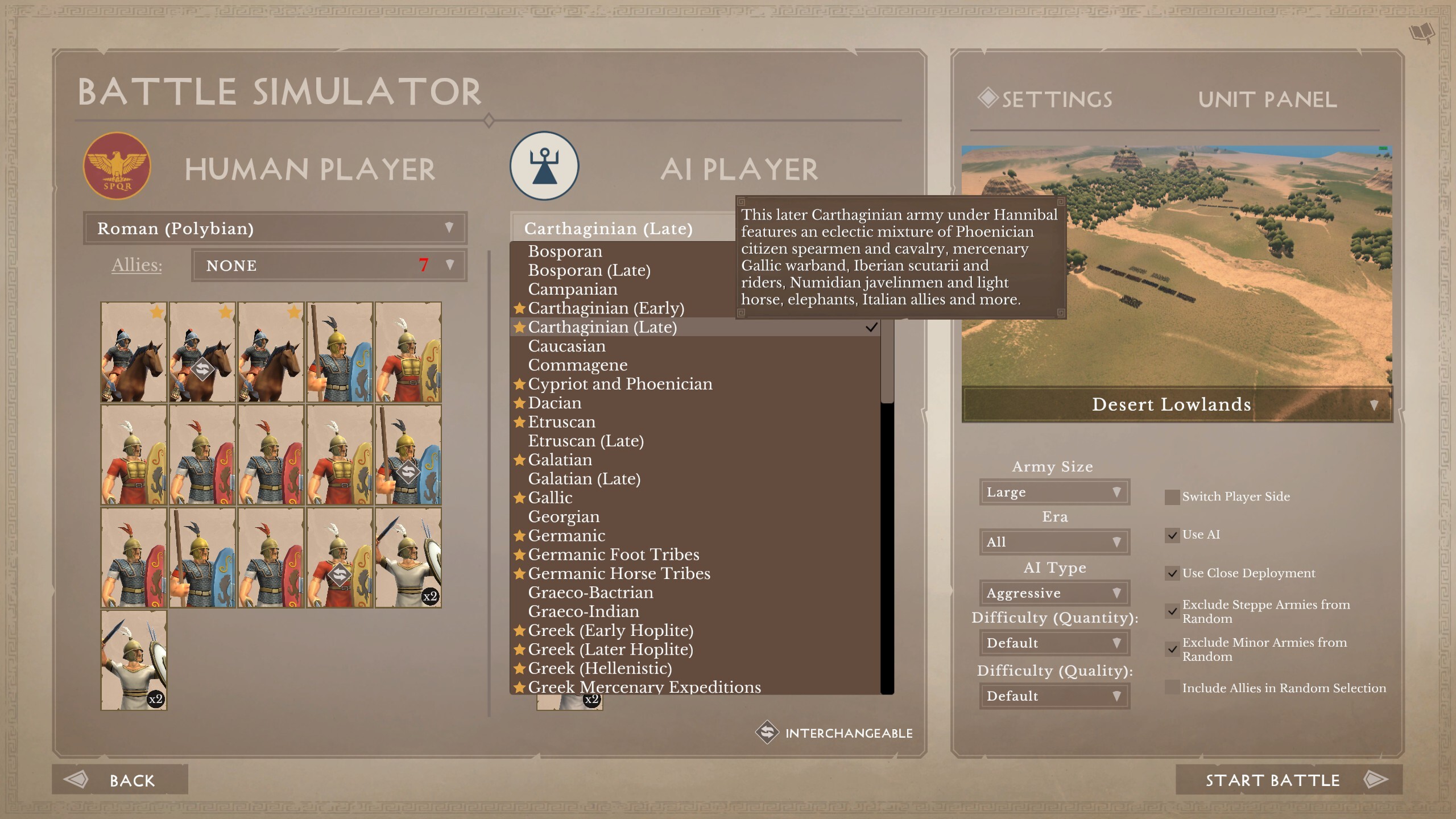
Optimizations:
Campaigns:
New Maps:
Misc:
Sun, 6 September 2026
Optimizations:
- moderate CPU optimizations for lower end machines for unit calculations and soldier elevation detection
- improved load times
Campaigns:
- adjustment to some roll table menus for text size
New Maps:
- Broken Terrain
- Nile Crossing
- Rolling Mountain Forests
- Forest Defile
Misc:
- edited Indian elephant description
- fix janky banner movement
- fixed name translations for a few maps
#46
Games Discussion / Re: Empire in Arms the Napoleo...
Last post by Asid - September 06, 2026, 12:52:10 PMEIA v1.50.XXX Beta
Fri Sep 04, 2026
By pzgndr
Hello all, it's been a busy spring/summer with Marshall Ellis back into code development and working on making EIA better.
We have had some playtesters checking out the new versions and received good feedback. The latest version is stable and we're starting to look at release. I've started work on game manual updates. Over the next few weeks, anybody who is interested in checking out the new version is welcome to help playtest and provide feedback.
For beta testing, it is recommended that you install another clean version of EIA in a different directory, say \Empires in Arms Beta. You can have multiple installs of Matrix games. So, run the v1.23.08 installer, then apply the v1.27.4 update, and then download the beta files from the DropBox link and unzip/copy them into your beta directory.
DropBox Link for v1.50.026: HERE
The /Data/docs has the updated Release Notes, but reposted here so you can see what you're getting into:
Version 1.50.00
Empires in Arms the Napoleonic Wars - 1.50.025 2026/09/03
=======================================================================
- Improvements
o Added new Modern Desktop Functionality. This allows many windows to be moved around the desktop or to other monitors. This also allows many windows to be shown in a non-modal form so you can for example: monitor your Political Status as the window stays visible on your desktop. Info windows can be chosen from the new Top Menu Button that replaced the "Selected Nation" button. This allows you to specify what info windows are visible, save your desktop settings to disk or set your desktop to the game's default setup.
o Added new Area Zoom Window which will automatically zoom to the selected area and give you a clear view without units. Good for seeing the size/fortification of the city and the forage value of the area. This new window will show a representative image of the nation being played when no area is not selected or an area with no nation (Sea area) is selected.
o Added new Phase Actions Window. You can now click the new button (with the 2 diagonal arrows) at the right side of the message window (Bottom left of screen) and a new Phase Button window will appear with larger buttons and the full button descriptions below each button. No more paging or hovering. Quickly see the larger buttons and their action text!
o Added new Log Window. A button on the newer Phase Action Window This window includes a new message box and a button that will allow you to view the game log on a larger, sizeable, mobile window. You can also specify a search filter in the top text box to filter out unwanted messages. Messages in the log with your country are also automatically colored to your nation to help quickly see messages that concern your nation.
o Added new smoother arrows in the AAR modes.
o Added smoother shading of minors which are either free states or conquered.
o Added a "Highlight Winter Zones" button on the Strategic Map that place a little snow on the areas that are affected by Winter. This includes sea zones that ice over (Russia). This option can easily be enabled/disabled. This allows you quickly see potential supply/movement cost issues.
o Added Required "Quixley LET" font at run time to avoid the need of font installation in your system!
o Added ability to build land forces by simply double clicking on one of your nation's home areas (and NOT a unit). If you double clicked on a port then it will automatically bring up the ship building window for that port.
o Add ability to build land forces if you double click on one of your Freestate's areas. And again, if you double clicked on a port on one of your Freestate's areas then it will bring up the shup building window.
o Added AAR mode settings to the saved game so it will be persistent through restarts.
o Added mouse wheel map scrolling up and down. Quickly scroll up or down with the mouse wheel.
o Added victory posters for each nation which show at victory screen.
o Smoothed area outlines when selecting or seeing possible moves.
o Improved map drawing speed (Added Microsoft GDI+ Graphics Library).
o Added ability to change options/preference values with mouse wheel. No more double-clicking from Hell 😊
o Added Sprite explosion animation for AI battle locations. A little more info as to what/where battles are being fought.
o Added sprite surrender animation for showing minor surrenders.
o Added an indicator at the top left of the Create/Remove Depot button in the new Phase Actions panel that shows how many depots are left for that major power.
o Improved AI Aggression in late game scenarios.
o Added colored strength indicators when looking at a unit stack. Green = Unit is >= 80% of Troop Capacity, Yellow = Unit is between 40% and less than 80%, Red = Unit is less than 40% in troop capacity.
o Added better nation view and selected nation forms.
o Added a quick method of creating/adding to a garrison in the move phase. Click your unit then dbl click its area and the create/add to garrison dialog should appear.
o Added a quick method of moving to a city. Click your unit in the move phase then dbl click the area (Not on a unit) and it will move to the city (Besieging).
o Added more AI Improvements from Bill (Mainly dealing with Alliance management).
o Added options (When right licking the strategic map) to see the Conquered and/or the Freestate flags for minors. This helps reduce (Optionally) map clutter.
o Added sprite for minors that move to neutral status (Loss during fiasco/instability).
o Added sprite for alliances forming.
o Added sprite for a major DOW.
o Added surrender flag sprite to minors that are lost to another major power during the fiasco/instability check.
o Added hint text in the build units dialog that will show the available factors on the map and off the map for each troop type (Hover over the up/down buttons).
o Added Leader battle records. Now you can see a leader's game record in wins/losses/ties.
o Added an auto zoom to the first area with a battle to be fought at the beginning of the land combat phase.
o Added an Unassigned Leader check to setup (Bill)
o Assigned leader assignments to Great Britain, Russia and France for 1812 and 1813 Campaigns (Bill)
o Added double-clicking a home nation's city area with no garrison will auto create a garrison.
- Bug Fixes
o Fixed minor map update issue which was not showing the available areas to unload your ship(s).
o Fixed issue when removing a Depot that contained some factors in it that was displaying a garbled message. Now will display "Depot Contains Factors that will be Eliminated if you Continue"
o Fixed map issue. Area730 (N/NW of Tripoli) was not allowing port entry to Tripoli. This was largely a non-issue since work around code was applied in earlier patch but proper fix was to configure the border between Area730 and Tripoli properly in the map data. This change was made in all current scenarios.
o Cleaned up the map scroll a bit by cleaning any unused area on the screen with black space.
o Fixed Load Setup/Saved Game Dialog box compatibility issues with modern Windows 10/11. Should properly auto select the correct directory.
o Fixed issue with AI successful Withdraw chit not resolving a proper retreat. Was staying in combat area.
o Fixed issue with a leader in combat being left in the combat area when all of his friendly forces were eliminated after the battle.
o Fixed issue where sometimes a depot was being left in a combat area after it was forced to retreat or withdraw.
o Fixed issue where some leaders were escaping captivity!
o Fixed issue where you were not allowed to place a leader into a non-besieged area free of enemy units with friendly corps.
o Fixed issue where unit move ranges were not being shown even when the "Always Show Ranges" option was enabled. This is only for units under your control.
o Fixed lockup issue with over garrisoned cities that contained enemy units from a Kingdom BUT the area was not under siege.
o Fixed issue that forced an alliance break with nations under an enforced peace but should not break an alliance because they had a common enemy.
o Fixed issue where Kingdom units were not participating in combats where they should have!
o Fixed issue where more than 3 provinces were being ceded when Polish provinces were being selected.
o Fixed issue where released leaders were randomly teleporting to the map
o Fixed issue with Major Alliance Modifiers Table which has an invalid value for Austria/Prussia
o Fixed issue with some blockades persisting even after a successful attempt was made to lift, causing a battle with a "ghost fleet".
o Fixed issue with some garrisons in a friendly controlled nation positioning themselves in Enemy City locations making it impossible to lay siege upon the city.
o Fixed issue with French victory screen.
o Naval work
� Fixed issues with Blockade running which was not allowing units to move out of the port even if they won.
� Fixed issue with random units appearing in a blockade battle.
� Added Lift Blockade battle which when fought, if won then the blockading nation(s) will retreat to nearest port. If lost then no units forced to retreat/move
� Fixed issue where no naval retreats were happening.
o Fixed more leader location issues (Captured and escaping).
o Fixed issue with garrisons not being located properly in areas (Now should correct).
o Fixed issue with 2 enemies going after the same minor nation. After the standard combat, the winning side could have been in ally city so the assault attempts right after winning could possibly put the assaulting in the wrong city location thus creating unpredictable side effects in combat.
o Fixed issue where in some battle clean up scenarios, a garrison was being moved outside a city.
o Fixed issue where Kingdom units were not always being loaded into battles nor retreating properly.
o Fixed issue with unit location at Strasbourg (Alsace/France) which had its Ally rural unit location set in the area next to Alsace??? Could have been my earlier clumsy fixes.
o Fixed issue with surrender screen sometimes showing garbled characters for conditions.
o Fixed issue with possible moves showing right after a DOW.
o Fixed issue with garrisons moving to rural areas after the area's nation surrenders to the garrison's nation. They now relocate to Ally city for the temporary access period.
o Fixed issue when game is over and there is no winner then Great Britain wins in this situation (Game was not doing this).
o Fixed issue which was causing units to disappear when a minor unit (In the same stack) is removed from play due to a nation status change.
o Fixed issue with units sometimes retreating to an invalid area (Mostly associated with battles next to a nation's capital).
o Fixed reinforcement issue which was allowing un-purchased corps to be placed in the game at a reinforcement phase.
o Fixed issue with Allies not supplying their Allies Minors.
o Fixed issue with Metz not being French in scenario (002).
o Fixed issue where captured minor leaders were not being shown in the prisoner screen.
o Fixed issue with starting a new game (While in an active game) that was not redrawing the start menu properly.
- Changes
o Metered the previous change where AI opponents were only forced to cede a maximum of 1 province. Changed this so that an EZ AI opponent will still cede 3 provinces but a Medium AI opponent will only have to cede 2 provinces and a Hard AI opponent will only need to cede 1 province. If this bonus is applied then a message will show in the log.
o Added change to prevent Major Power from Interfering from another Neutral Major Power's war with a minor IF the 2nd MP is controls the capital and it is about to fall.
� For Example: If France and Austria are both at war with Bavaria and Austria makes it to the capital, besieges and wins then garrisons then France will not be allowed to garrison as well and in fact will pull out of the minor.
o Change DOW Sprite to Cannons firing at each other.
As you can see, there have been a lot of UI improvements and the additions of several new animations for diplomatic events. There have also been many bug fixes and AI improvements. Players should check it out. Enjoy!
Fri Sep 04, 2026
By pzgndr
Hello all, it's been a busy spring/summer with Marshall Ellis back into code development and working on making EIA better.
We have had some playtesters checking out the new versions and received good feedback. The latest version is stable and we're starting to look at release. I've started work on game manual updates. Over the next few weeks, anybody who is interested in checking out the new version is welcome to help playtest and provide feedback.
For beta testing, it is recommended that you install another clean version of EIA in a different directory, say \Empires in Arms Beta. You can have multiple installs of Matrix games. So, run the v1.23.08 installer, then apply the v1.27.4 update, and then download the beta files from the DropBox link and unzip/copy them into your beta directory.
DropBox Link for v1.50.026: HERE
The /Data/docs has the updated Release Notes, but reposted here so you can see what you're getting into:
Version 1.50.00
Empires in Arms the Napoleonic Wars - 1.50.025 2026/09/03
=======================================================================
- Improvements
o Added new Modern Desktop Functionality. This allows many windows to be moved around the desktop or to other monitors. This also allows many windows to be shown in a non-modal form so you can for example: monitor your Political Status as the window stays visible on your desktop. Info windows can be chosen from the new Top Menu Button that replaced the "Selected Nation" button. This allows you to specify what info windows are visible, save your desktop settings to disk or set your desktop to the game's default setup.
o Added new Area Zoom Window which will automatically zoom to the selected area and give you a clear view without units. Good for seeing the size/fortification of the city and the forage value of the area. This new window will show a representative image of the nation being played when no area is not selected or an area with no nation (Sea area) is selected.
o Added new Phase Actions Window. You can now click the new button (with the 2 diagonal arrows) at the right side of the message window (Bottom left of screen) and a new Phase Button window will appear with larger buttons and the full button descriptions below each button. No more paging or hovering. Quickly see the larger buttons and their action text!
o Added new Log Window. A button on the newer Phase Action Window This window includes a new message box and a button that will allow you to view the game log on a larger, sizeable, mobile window. You can also specify a search filter in the top text box to filter out unwanted messages. Messages in the log with your country are also automatically colored to your nation to help quickly see messages that concern your nation.
o Added new smoother arrows in the AAR modes.
o Added smoother shading of minors which are either free states or conquered.
o Added a "Highlight Winter Zones" button on the Strategic Map that place a little snow on the areas that are affected by Winter. This includes sea zones that ice over (Russia). This option can easily be enabled/disabled. This allows you quickly see potential supply/movement cost issues.
o Added Required "Quixley LET" font at run time to avoid the need of font installation in your system!
o Added ability to build land forces by simply double clicking on one of your nation's home areas (and NOT a unit). If you double clicked on a port then it will automatically bring up the ship building window for that port.
o Add ability to build land forces if you double click on one of your Freestate's areas. And again, if you double clicked on a port on one of your Freestate's areas then it will bring up the shup building window.
o Added AAR mode settings to the saved game so it will be persistent through restarts.
o Added mouse wheel map scrolling up and down. Quickly scroll up or down with the mouse wheel.
o Added victory posters for each nation which show at victory screen.
o Smoothed area outlines when selecting or seeing possible moves.
o Improved map drawing speed (Added Microsoft GDI+ Graphics Library).
o Added ability to change options/preference values with mouse wheel. No more double-clicking from Hell 😊
o Added Sprite explosion animation for AI battle locations. A little more info as to what/where battles are being fought.
o Added sprite surrender animation for showing minor surrenders.
o Added an indicator at the top left of the Create/Remove Depot button in the new Phase Actions panel that shows how many depots are left for that major power.
o Improved AI Aggression in late game scenarios.
o Added colored strength indicators when looking at a unit stack. Green = Unit is >= 80% of Troop Capacity, Yellow = Unit is between 40% and less than 80%, Red = Unit is less than 40% in troop capacity.
o Added better nation view and selected nation forms.
o Added a quick method of creating/adding to a garrison in the move phase. Click your unit then dbl click its area and the create/add to garrison dialog should appear.
o Added a quick method of moving to a city. Click your unit in the move phase then dbl click the area (Not on a unit) and it will move to the city (Besieging).
o Added more AI Improvements from Bill (Mainly dealing with Alliance management).
o Added options (When right licking the strategic map) to see the Conquered and/or the Freestate flags for minors. This helps reduce (Optionally) map clutter.
o Added sprite for minors that move to neutral status (Loss during fiasco/instability).
o Added sprite for alliances forming.
o Added sprite for a major DOW.
o Added surrender flag sprite to minors that are lost to another major power during the fiasco/instability check.
o Added hint text in the build units dialog that will show the available factors on the map and off the map for each troop type (Hover over the up/down buttons).
o Added Leader battle records. Now you can see a leader's game record in wins/losses/ties.
o Added an auto zoom to the first area with a battle to be fought at the beginning of the land combat phase.
o Added an Unassigned Leader check to setup (Bill)
o Assigned leader assignments to Great Britain, Russia and France for 1812 and 1813 Campaigns (Bill)
o Added double-clicking a home nation's city area with no garrison will auto create a garrison.
- Bug Fixes
o Fixed minor map update issue which was not showing the available areas to unload your ship(s).
o Fixed issue when removing a Depot that contained some factors in it that was displaying a garbled message. Now will display "Depot Contains Factors that will be Eliminated if you Continue"
o Fixed map issue. Area730 (N/NW of Tripoli) was not allowing port entry to Tripoli. This was largely a non-issue since work around code was applied in earlier patch but proper fix was to configure the border between Area730 and Tripoli properly in the map data. This change was made in all current scenarios.
o Cleaned up the map scroll a bit by cleaning any unused area on the screen with black space.
o Fixed Load Setup/Saved Game Dialog box compatibility issues with modern Windows 10/11. Should properly auto select the correct directory.
o Fixed issue with AI successful Withdraw chit not resolving a proper retreat. Was staying in combat area.
o Fixed issue with a leader in combat being left in the combat area when all of his friendly forces were eliminated after the battle.
o Fixed issue where sometimes a depot was being left in a combat area after it was forced to retreat or withdraw.
o Fixed issue where some leaders were escaping captivity!
o Fixed issue where you were not allowed to place a leader into a non-besieged area free of enemy units with friendly corps.
o Fixed issue where unit move ranges were not being shown even when the "Always Show Ranges" option was enabled. This is only for units under your control.
o Fixed lockup issue with over garrisoned cities that contained enemy units from a Kingdom BUT the area was not under siege.
o Fixed issue that forced an alliance break with nations under an enforced peace but should not break an alliance because they had a common enemy.
o Fixed issue where Kingdom units were not participating in combats where they should have!
o Fixed issue where more than 3 provinces were being ceded when Polish provinces were being selected.
o Fixed issue where released leaders were randomly teleporting to the map
o Fixed issue with Major Alliance Modifiers Table which has an invalid value for Austria/Prussia
o Fixed issue with some blockades persisting even after a successful attempt was made to lift, causing a battle with a "ghost fleet".
o Fixed issue with some garrisons in a friendly controlled nation positioning themselves in Enemy City locations making it impossible to lay siege upon the city.
o Fixed issue with French victory screen.
o Naval work
� Fixed issues with Blockade running which was not allowing units to move out of the port even if they won.
� Fixed issue with random units appearing in a blockade battle.
� Added Lift Blockade battle which when fought, if won then the blockading nation(s) will retreat to nearest port. If lost then no units forced to retreat/move
� Fixed issue where no naval retreats were happening.
o Fixed more leader location issues (Captured and escaping).
o Fixed issue with garrisons not being located properly in areas (Now should correct).
o Fixed issue with 2 enemies going after the same minor nation. After the standard combat, the winning side could have been in ally city so the assault attempts right after winning could possibly put the assaulting in the wrong city location thus creating unpredictable side effects in combat.
o Fixed issue where in some battle clean up scenarios, a garrison was being moved outside a city.
o Fixed issue where Kingdom units were not always being loaded into battles nor retreating properly.
o Fixed issue with unit location at Strasbourg (Alsace/France) which had its Ally rural unit location set in the area next to Alsace??? Could have been my earlier clumsy fixes.
o Fixed issue with surrender screen sometimes showing garbled characters for conditions.
o Fixed issue with possible moves showing right after a DOW.
o Fixed issue with garrisons moving to rural areas after the area's nation surrenders to the garrison's nation. They now relocate to Ally city for the temporary access period.
o Fixed issue when game is over and there is no winner then Great Britain wins in this situation (Game was not doing this).
o Fixed issue which was causing units to disappear when a minor unit (In the same stack) is removed from play due to a nation status change.
o Fixed issue with units sometimes retreating to an invalid area (Mostly associated with battles next to a nation's capital).
o Fixed reinforcement issue which was allowing un-purchased corps to be placed in the game at a reinforcement phase.
o Fixed issue with Allies not supplying their Allies Minors.
o Fixed issue with Metz not being French in scenario (002).
o Fixed issue where captured minor leaders were not being shown in the prisoner screen.
o Fixed issue with starting a new game (While in an active game) that was not redrawing the start menu properly.
- Changes
o Metered the previous change where AI opponents were only forced to cede a maximum of 1 province. Changed this so that an EZ AI opponent will still cede 3 provinces but a Medium AI opponent will only have to cede 2 provinces and a Hard AI opponent will only need to cede 1 province. If this bonus is applied then a message will show in the log.
o Added change to prevent Major Power from Interfering from another Neutral Major Power's war with a minor IF the 2nd MP is controls the capital and it is about to fall.
� For Example: If France and Austria are both at war with Bavaria and Austria makes it to the capital, besieges and wins then garrisons then France will not be allowed to garrison as well and in fact will pull out of the minor.
o Change DOW Sprite to Cannons firing at each other.
As you can see, there have been a lot of UI improvements and the additions of several new animations for diplomatic events. There have also been many bug fixes and AI improvements. Players should check it out. Enjoy!
#47
Games Discussion / Re: Task Force Admiral - Vol.1...
Last post by Asid - September 06, 2026, 11:27:49 AMPatch Notes (2026-09-05) : Housekeeping, Fixes and... Batman
Sat, September 5, 2026
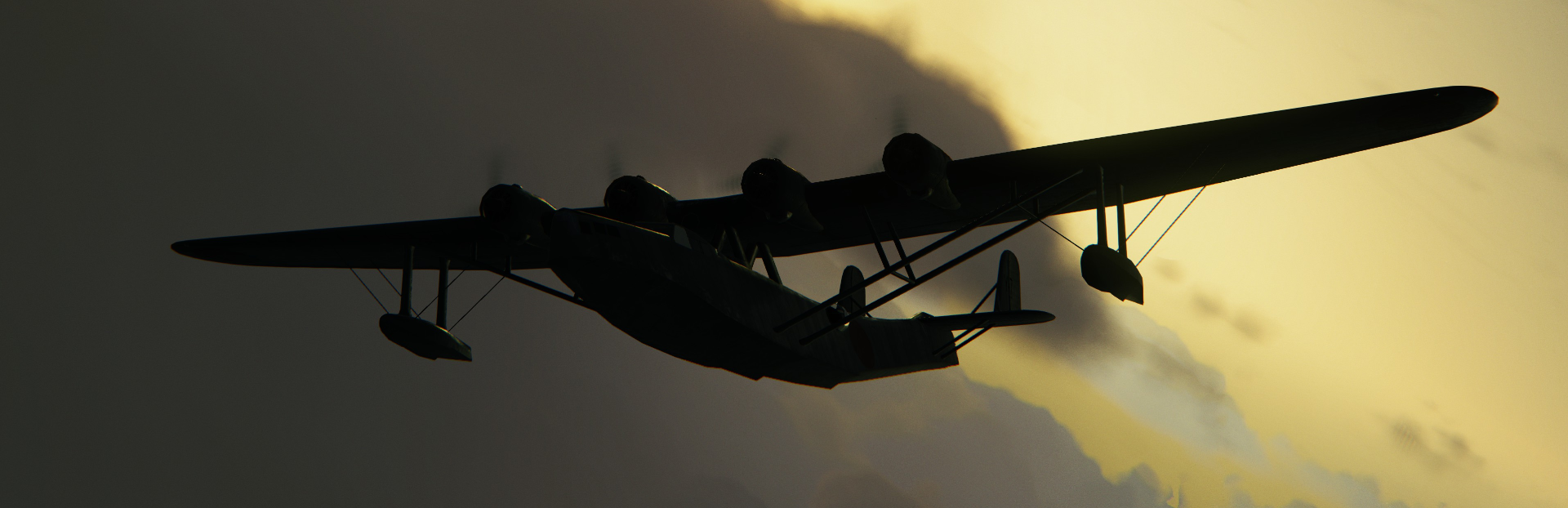
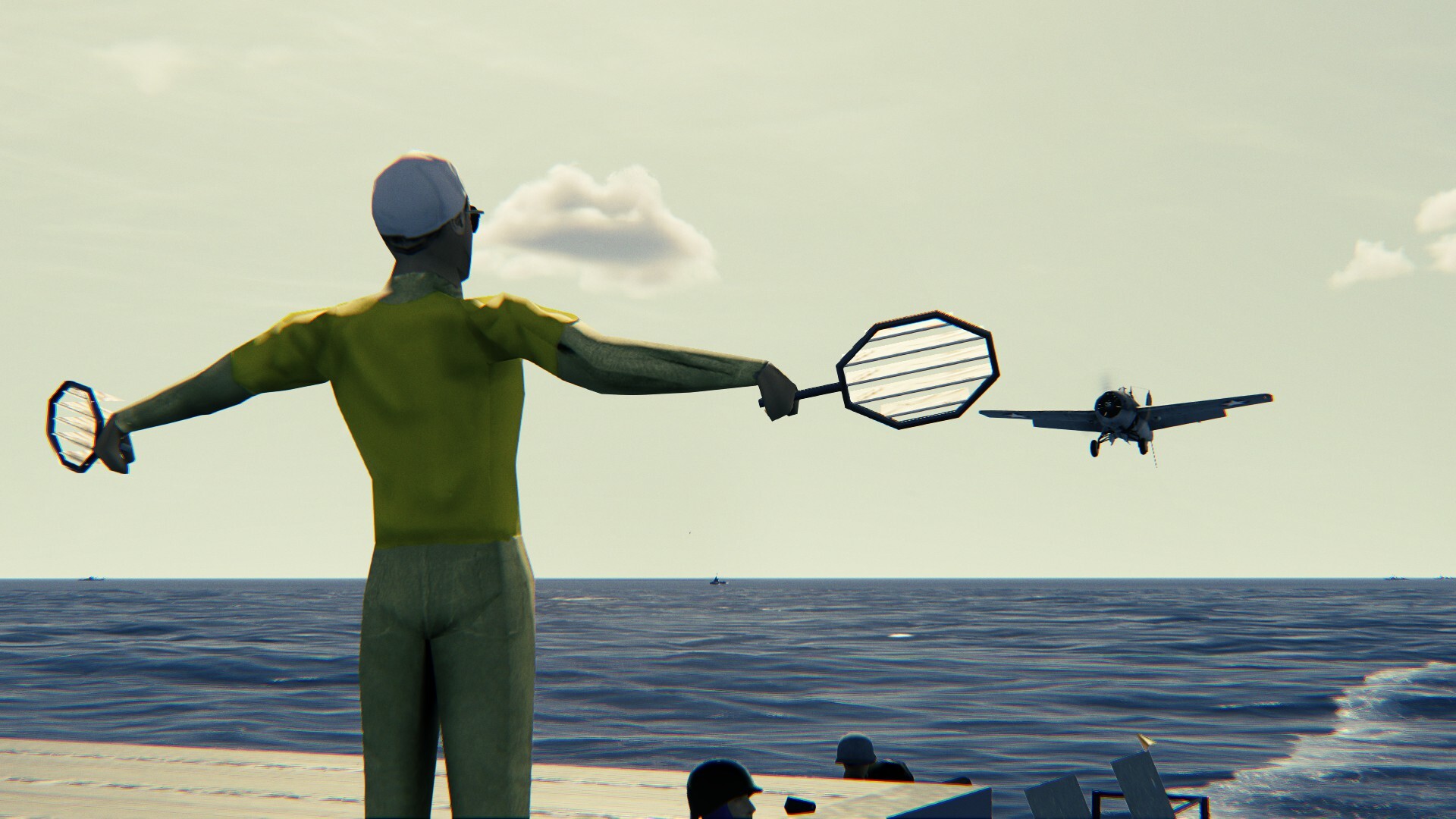
This patch is mostly about housekeeping, but a pretty nice extra! Say hi to the paddle-guy!
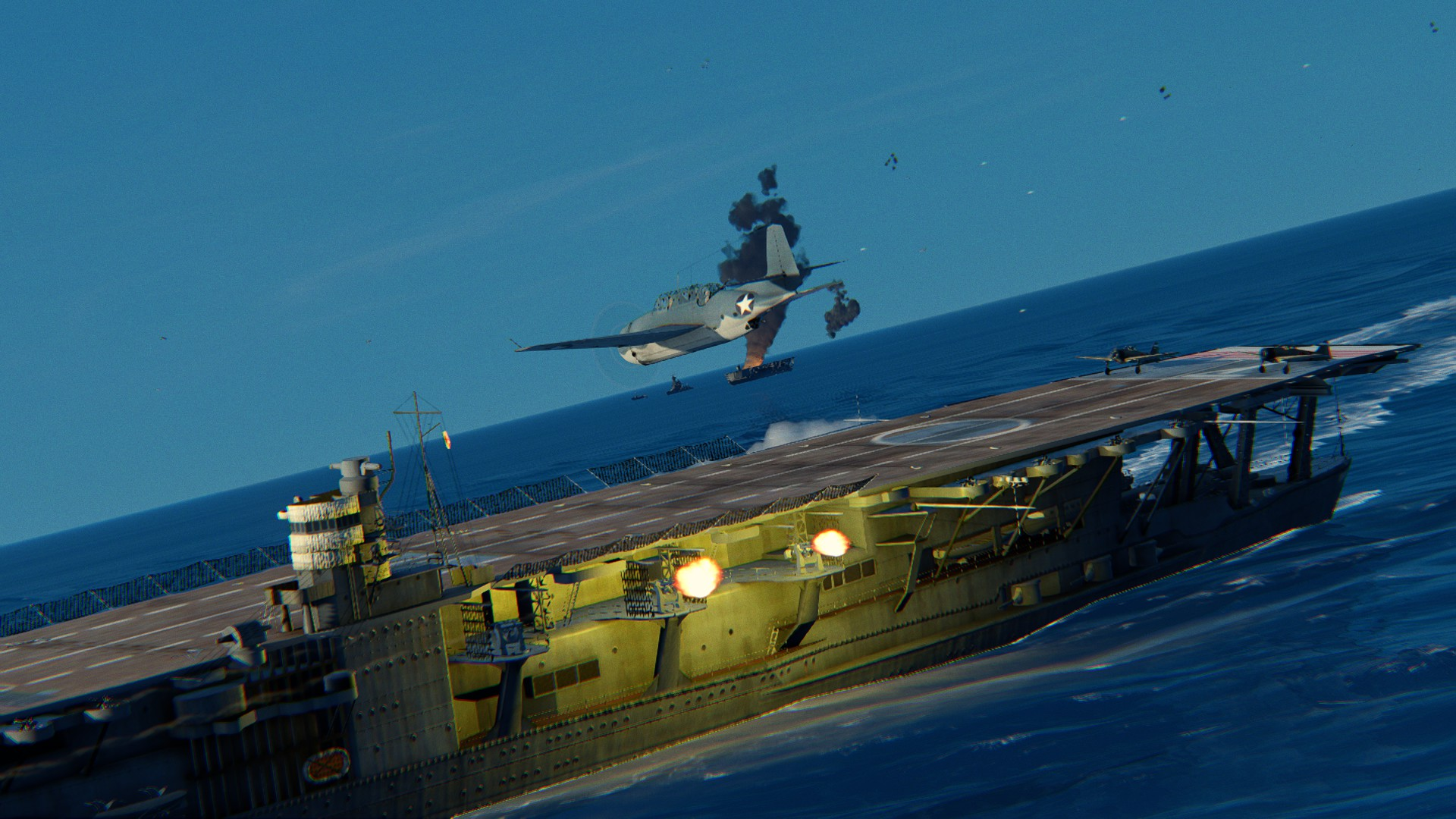
Screenshots by Alan, Foxman & 『GӨᄂDΣП』1
09/05/2026
You can disable it in the options, under the game category.
Fixed wrong video on debriefing.
You can disable it in the options, under the game category.
Fixed wrong video on debriefing.
Have fun & take care!
The Team
Sat, September 5, 2026
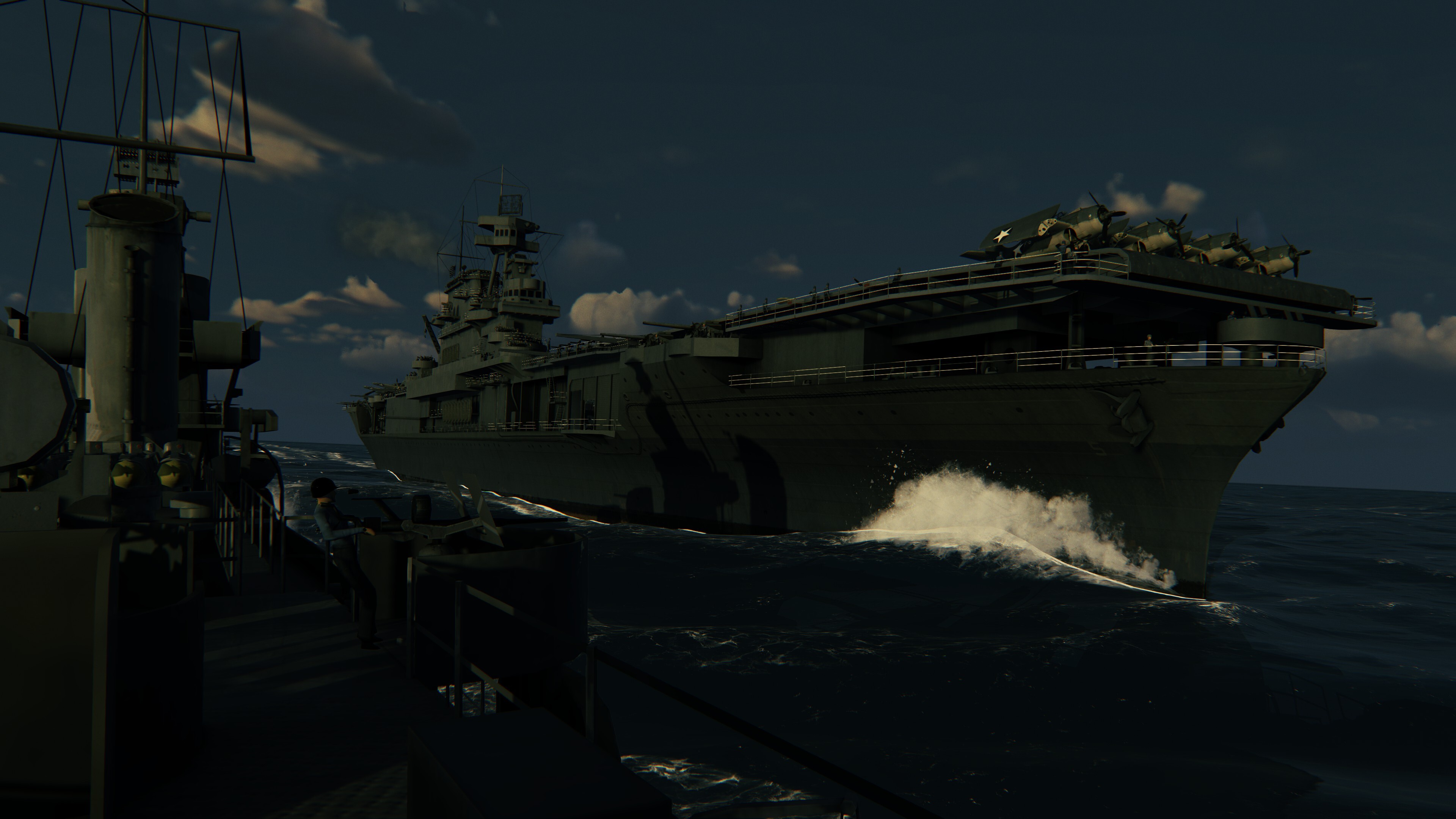
This patch is mostly about housekeeping, but a pretty nice extra! Say hi to the paddle-guy!
Screenshots by Alan, Foxman & 『GӨᄂDΣП』1
09/05/2026
- Added animated Landing Signal Officer (LSO) on all Yorktown class carriers. If things work as expected will only be active during landing sequences (with his platform deployed accordingly). If you encounter any bug, we'll be happy to have a look.
- Added an option to unfold all the sections when clicking on a mission in the OOB.
You can disable it in the options, under the game category.
- Fixed missing normal maps on all ships.
- Midway battle generator fixes:
Fixed wrong video on debriefing.
- Fixed ghost contact map plots turning back to normal after 24hrs
- Fixed Ouija's carrier selection box being rendered before plane icons.
- Fixed Ouija & Damage panels rendering order.Added Landing Signal Officer on all Yorktown class carriers.
- Added an option to unfold all the sections when clicking on a mission in the OOB.
You can disable it in the options, under the game category.
- Fixed missing normal maps on all ships.
- Midway battle generator fixes:
Fixed wrong video on debriefing.
- Fixed ghost contact map plots turning back to normal after 24hrs
- Fixed Ouija's carrier selection box being rendered before plane icons.
- Fixed Ouija & Damage panels rendering order.
Have fun & take care!
The Team
#48
Games Discussion / Re: Armaphract : A slow paced ...
Last post by Asid - September 06, 2026, 11:23:33 AM #49
Games Discussion / Armaphract : A slow paced tact...
Last post by Asid - September 06, 2026, 11:21:46 AM
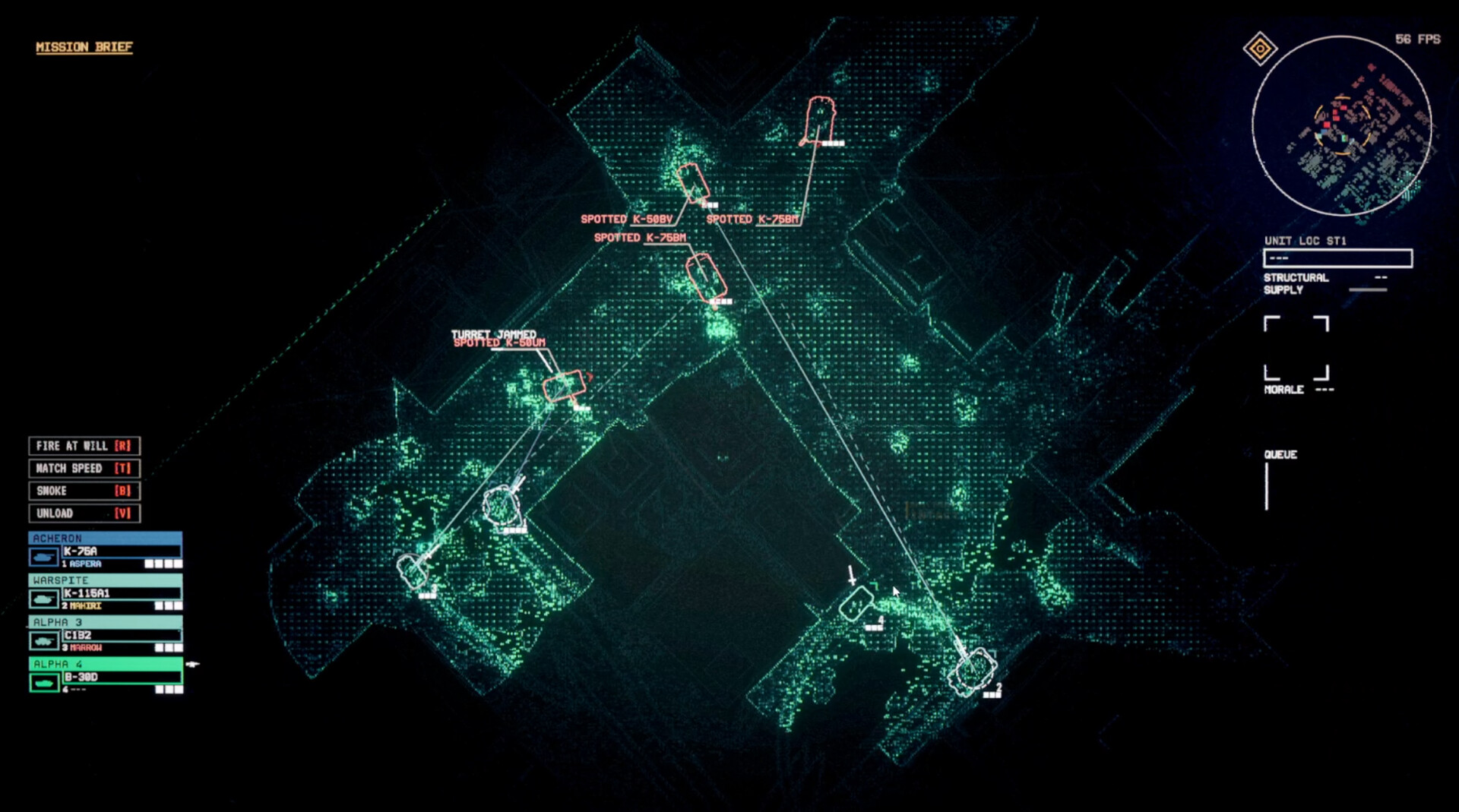
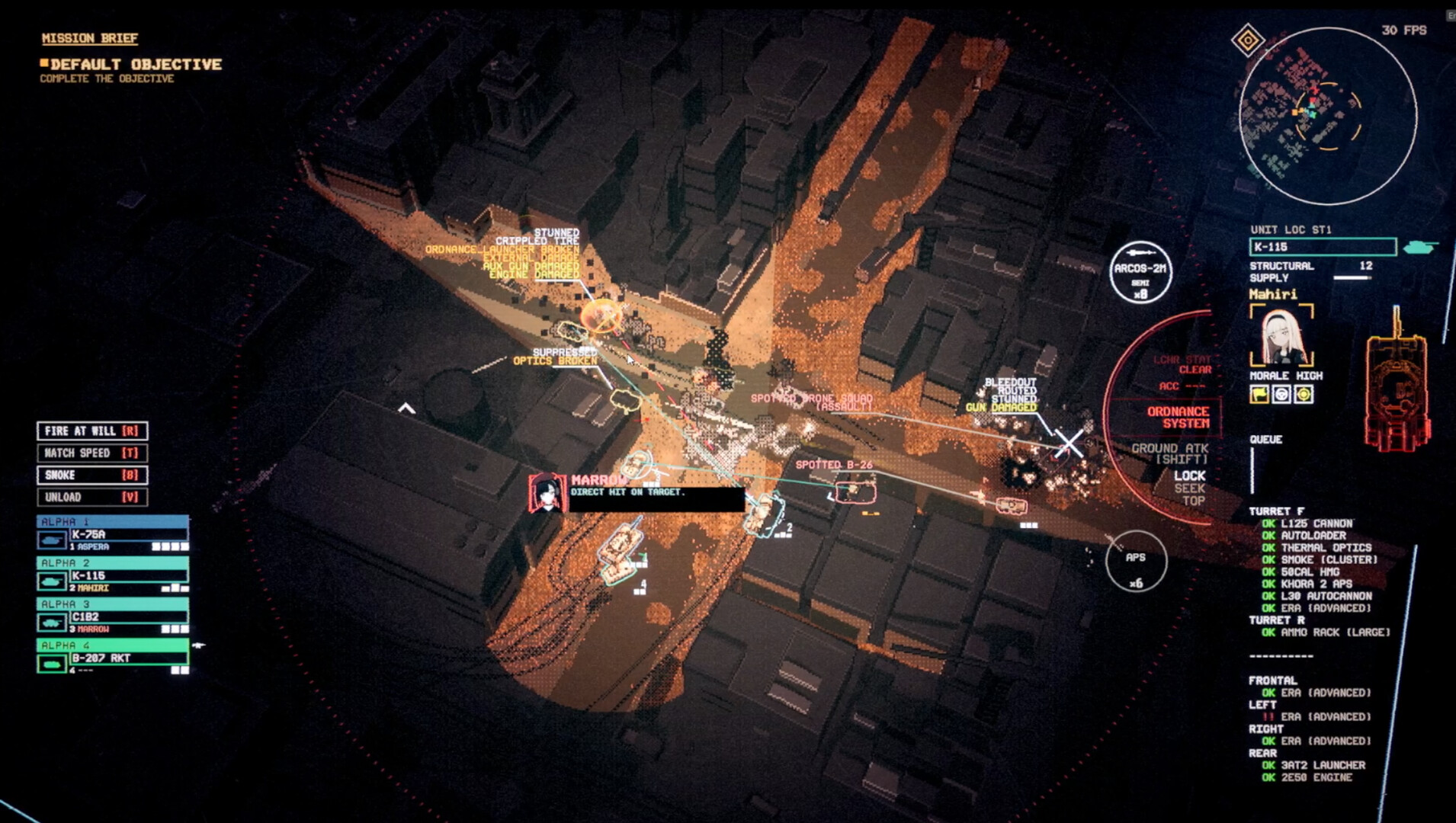
Outmatched, outgunned, but not outsmarted, you'll command a tank squad in tense urban warfare across a shattered megacity. A great power has collapsed, and opportunity is in the air. Take contracts and ambush powerful enemies, customize your squad, and reap the rewards.
Home page
Steam
Single-player
Armaphract Gameplay Trailer
About
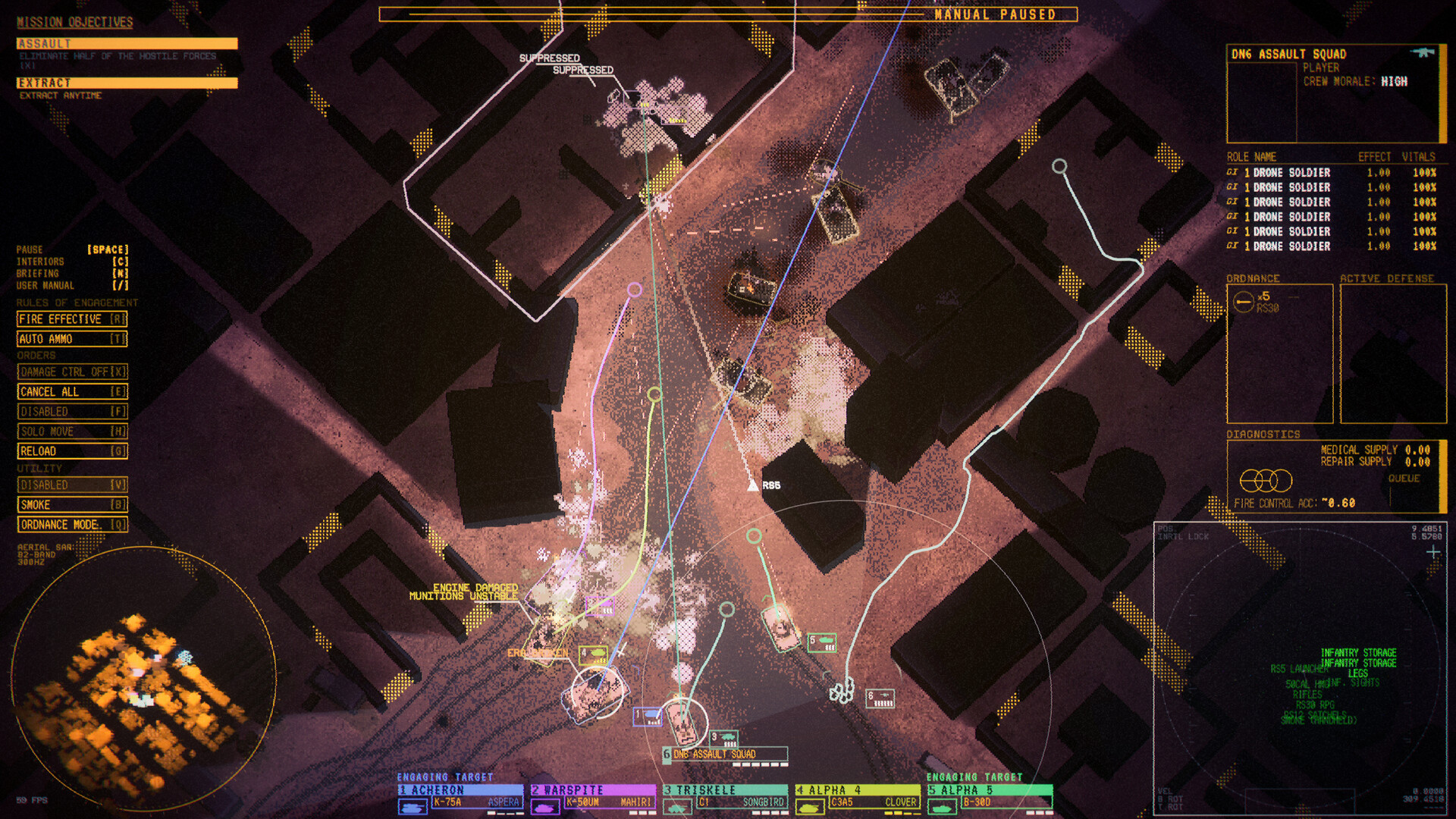
A slow paced tactical tank sim with bursts of action. You can choose to be methodical, pausing to plan out every move, or advance violently and adapt on the fly.
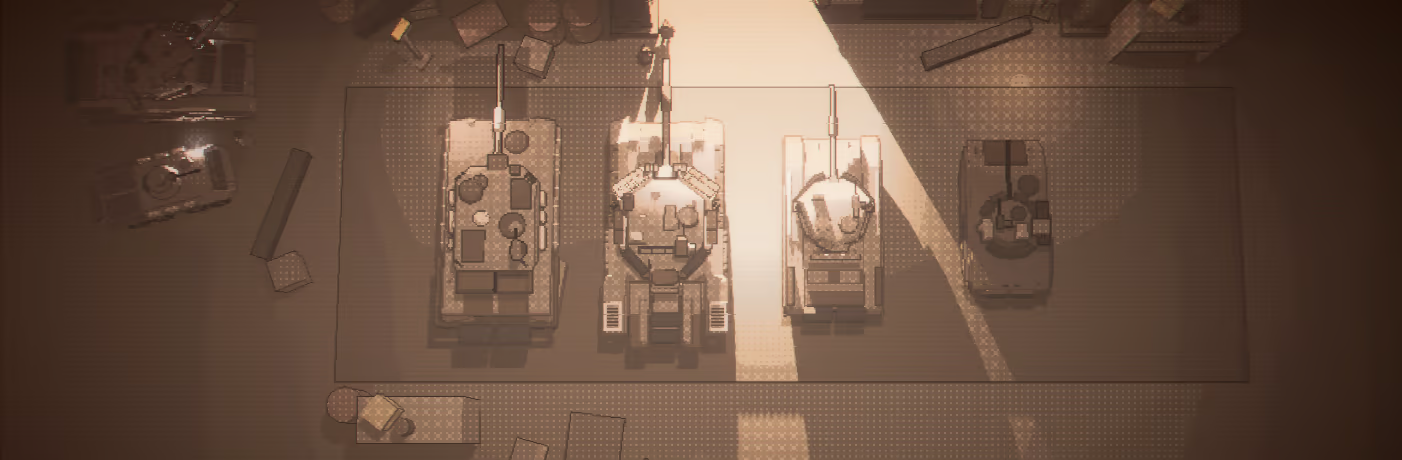
This game is still early in development. Please follow or wishlist if you want to be be notified when the game is out! Additionally, feel free to join the discord to chat with the community or try a dev build on itch.
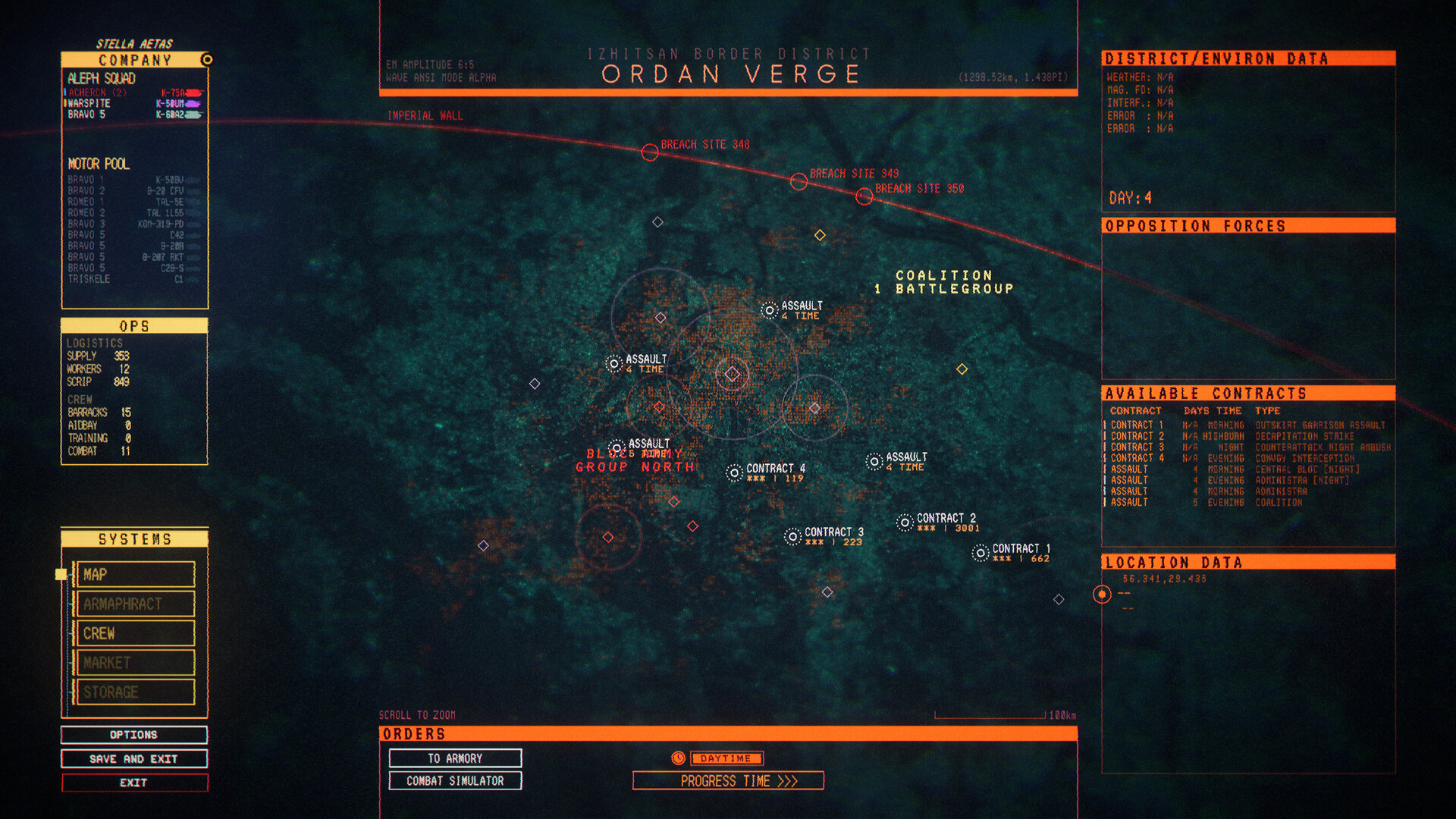
Maneuver through desert streets, assessing choke points and watching for ambushes in the alleys. Use powerful ordnance to eliminate clustered forces or collapse buildings to form new routes. Smoke to stage a push or obscure a retreat. Fight intelligent enemies which play by the same rules, lying in wait, organizing flanking attacks, or regrouping when threatened. Infantry can stalk armor from buildings across the map, which are destructible.
You'll have time, even in the most chaotic battles, to take a step back and plan your next moves. Draw out precise paths with waypoints to ensure all angles are covered. Use complete control over the movement of your vehicles and infantry.
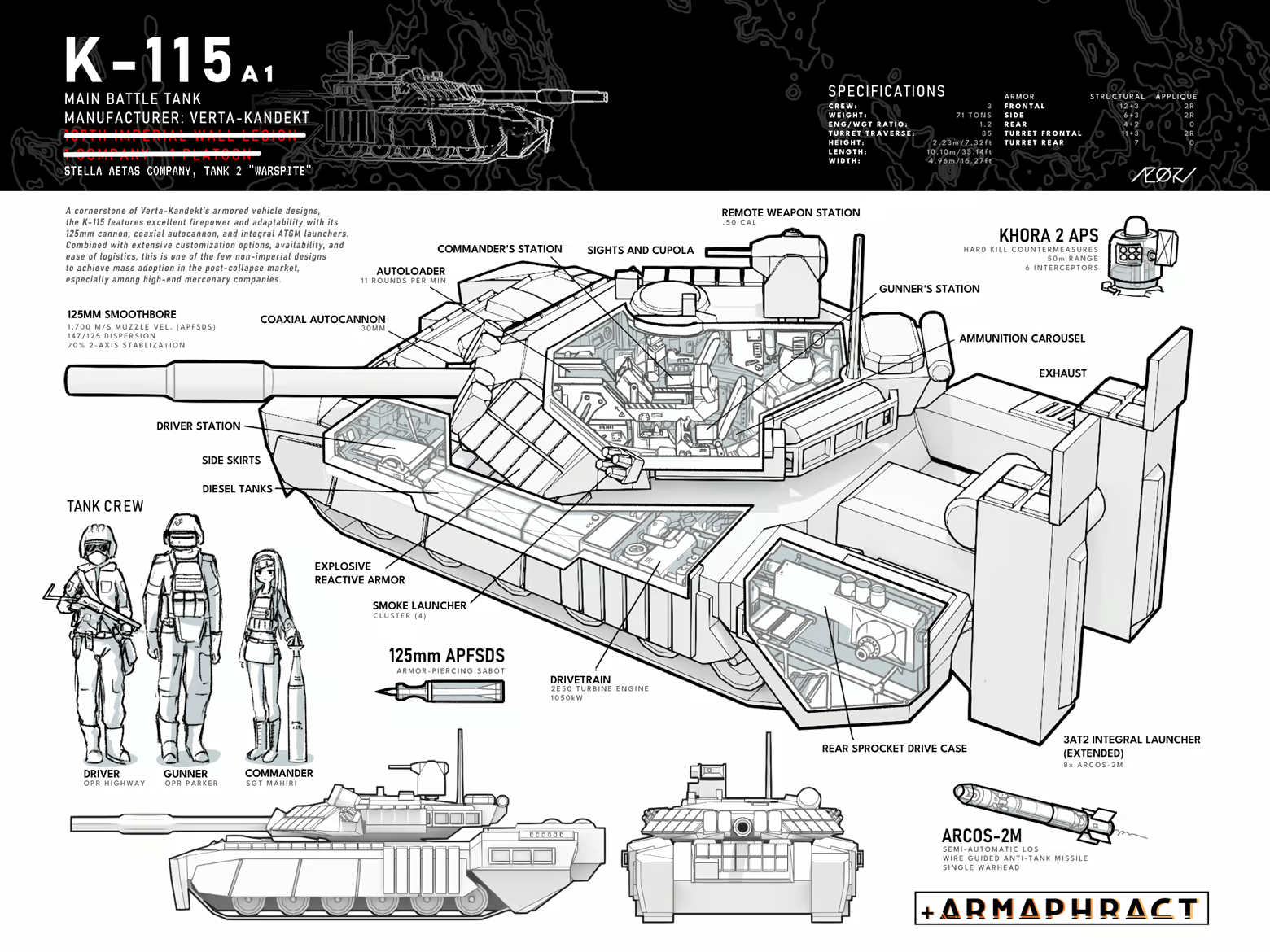
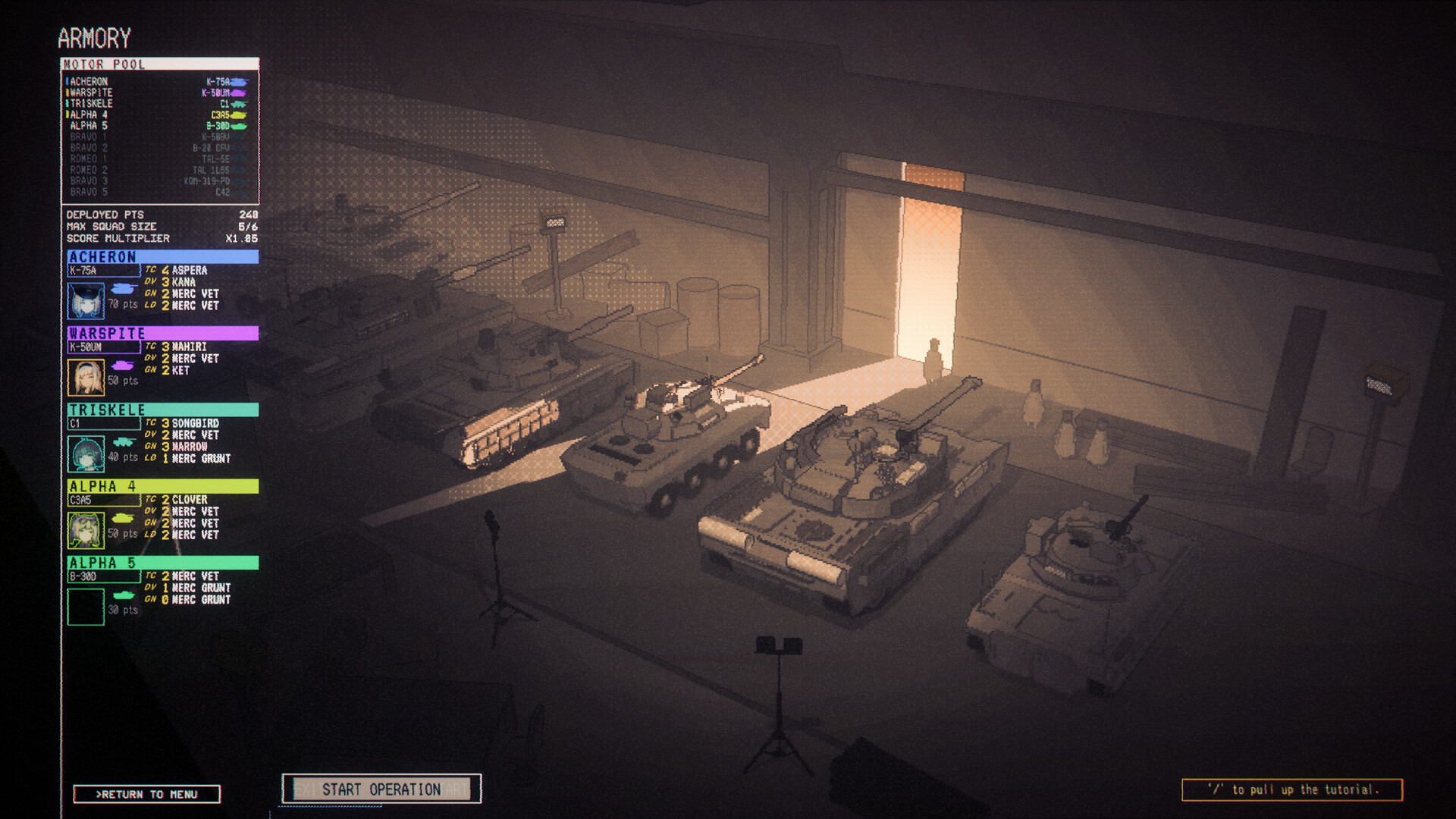
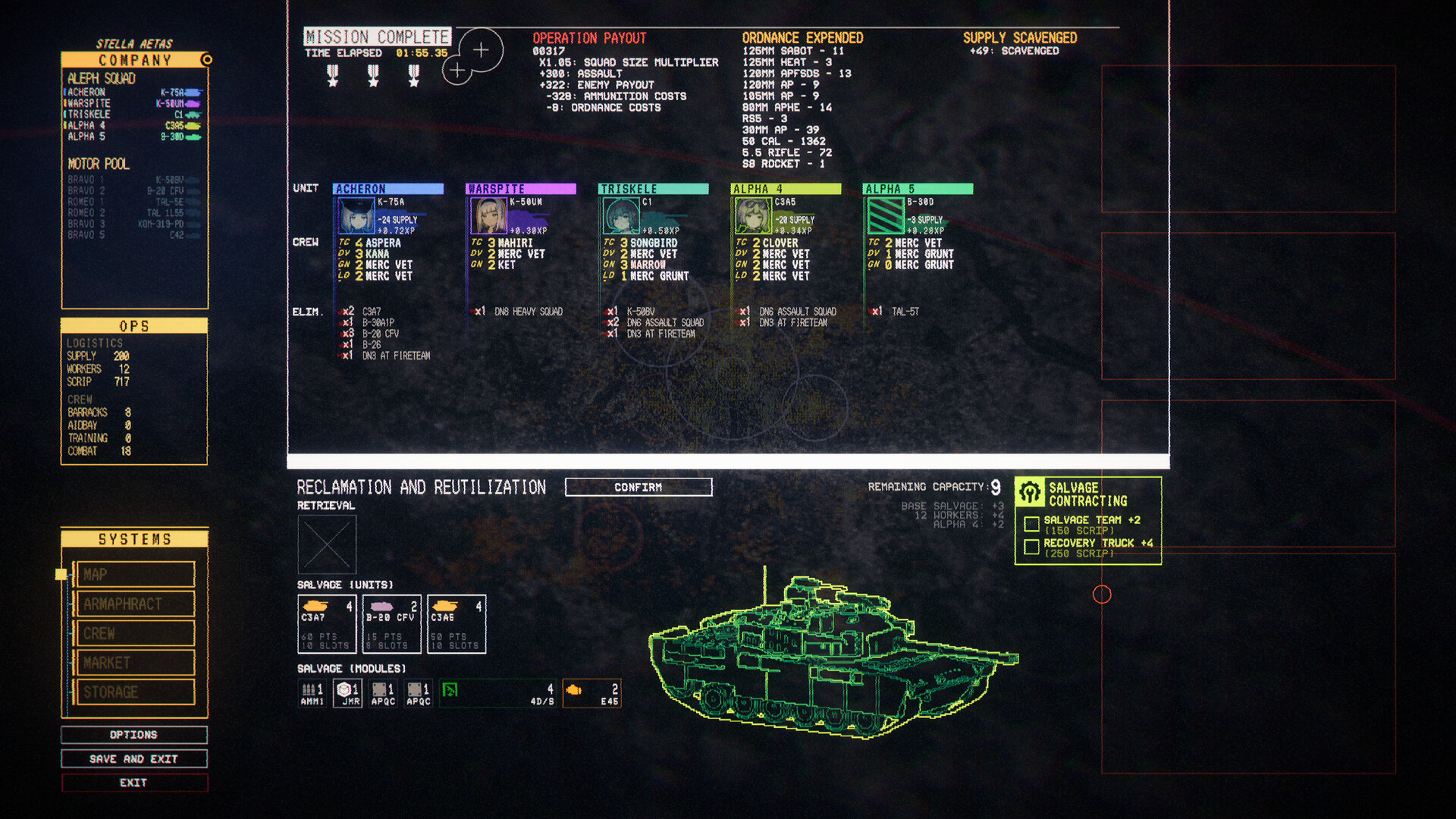
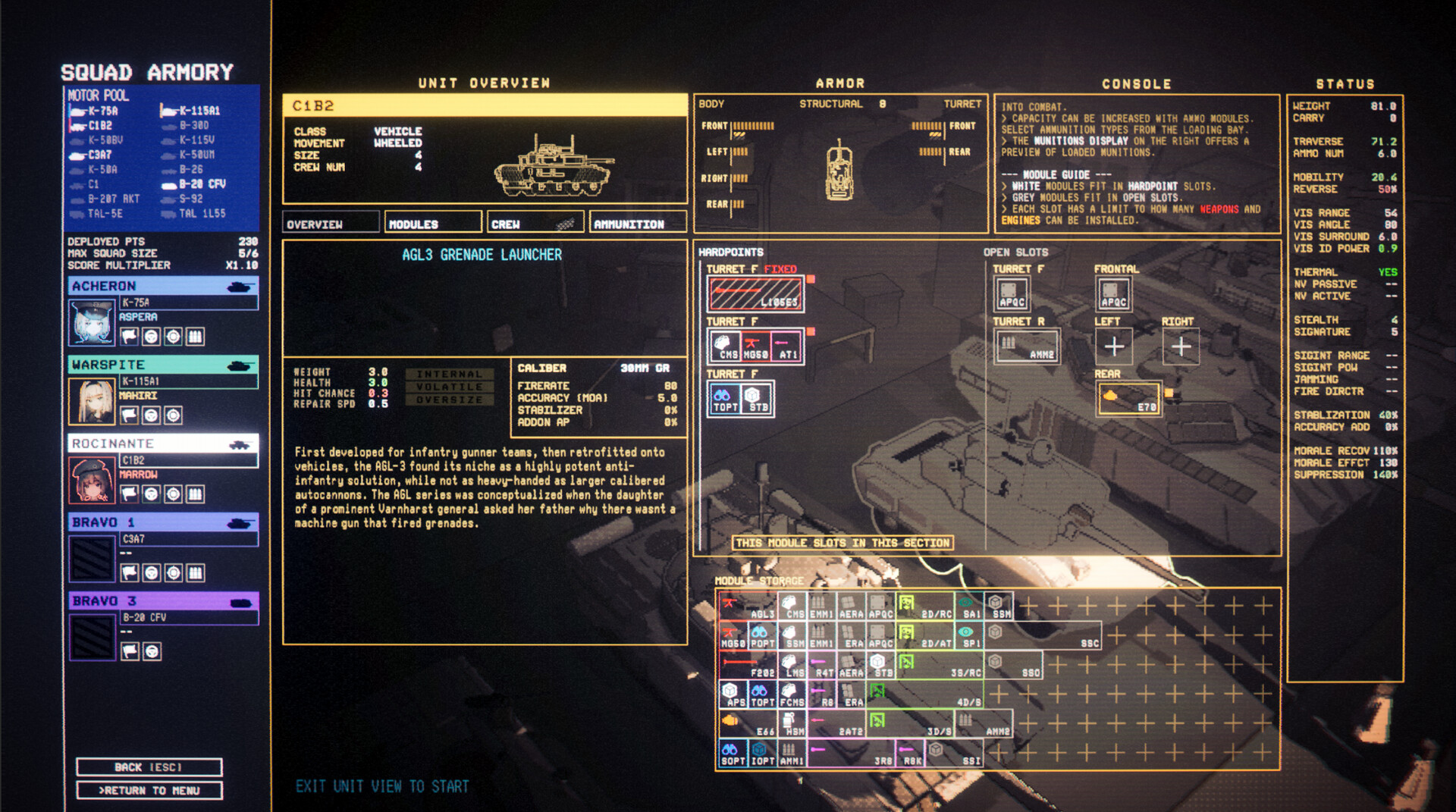
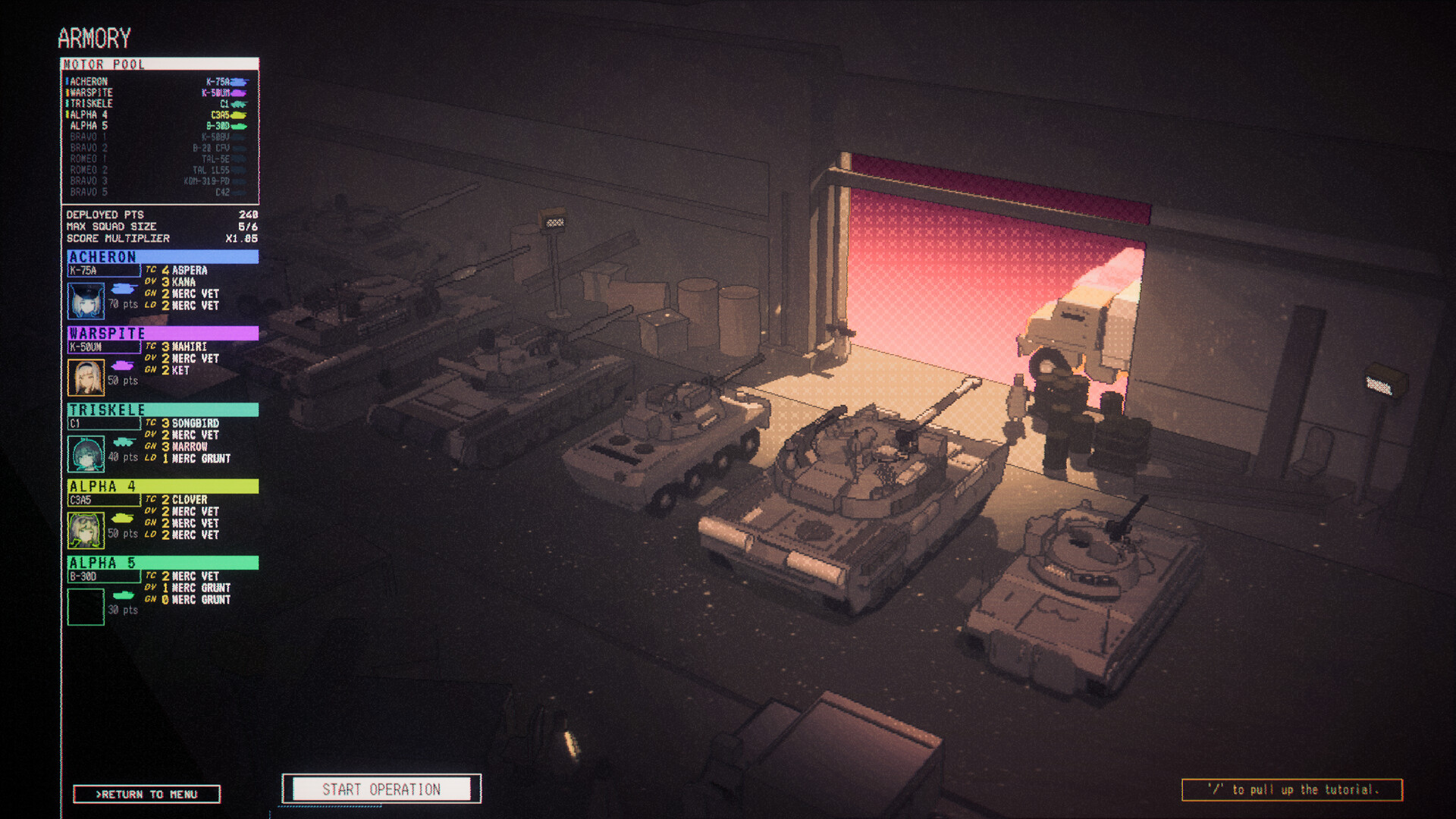
Customize your tanks with a modular loadout system! Bring a phalanx of superheavy tanks plastered with ERA, or ambush enemy armor with infantry in buildings, backed up by their IFVs equipped with dangerous ATGMs. Mix and match modules for necessity or for doctrine.
COMPLEXITY
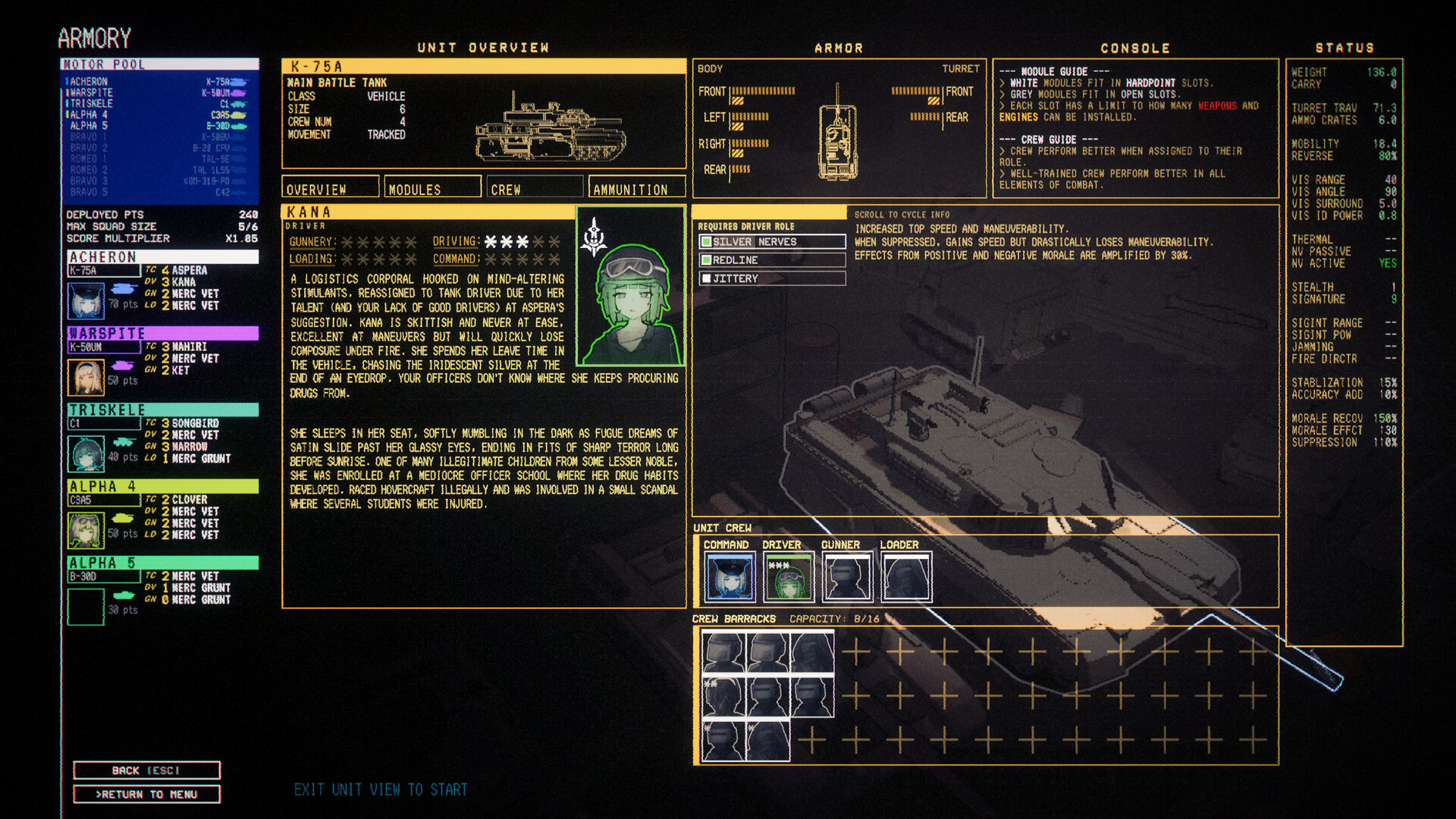
Individual crew stats, module health, and precise armor penetration values are all parts of the simulation, with the goal of incorporating realism while keeping it fun. ERA specializes against tandem warheads, crew will (poorly) cover for dead crew in other roles, and fires are put out faster when the vehicle is out of combat.
CAMPAIGN
Carve a path through the sand and streets of abandoned districts towards the forgotten edge of the city. Stalk through the territories of powerful factions, or hunt their elite forces down yourself. Manage your convoy, crew, and resources within your mercenary company. Make honorable choices, or let desperation or greed dictate your policy. Find notable characters with an array of roles, experience, and skills to join your company. Fight rival mercenaries and take lucrative contracts as the city stirs from its sleep.
Mature Content Description
The developers describe the content like this:
there are tanks and explosions and dying and stuff
#50
World War II Europe 1939-1945 / Re: Retirement Finally Happene...
Last post by Agent Smith - September 05, 2026, 08:35:49 AMG'day Ron.
Congratulations on all your efforts with NASA.

I've been along for the ride since Anglo-German War, and Middle East Wars, and obviously WW2-E.
Being from Aus; I'm obviously interested in how you'd treat the Pacific Theatre, A series of Island hopping scenarios and a tweaked Naval model perhaps?
Would also be good to see some polish and some upgraded scenarios for the Middle East game.
(imho, there's enough ACW games already).
Anyhoo, looking forward to seeing where your retirement leads to.
Hear's to a brutally aggressive tactical and strategic A.I.
Regards
A.

Congratulations on all your efforts with NASA.
I've been along for the ride since Anglo-German War, and Middle East Wars, and obviously WW2-E.
Being from Aus; I'm obviously interested in how you'd treat the Pacific Theatre, A series of Island hopping scenarios and a tweaked Naval model perhaps?
Would also be good to see some polish and some upgraded scenarios for the Middle East game.
(imho, there's enough ACW games already).
Anyhoo, looking forward to seeing where your retirement leads to.
Hear's to a brutally aggressive tactical and strategic A.I.
Regards
A.