- Welcome to Dogs Of War Vu.

Cry Havoc! And let slip the dogs of war!

Recent posts
#31
World War II Europe 1939-1945 / Re: Retirement Finally Happene...
Last post by schwerpt - September 11, 2026, 12:49:42 AMToday's (9-10-2026) status on development of #98 Gotterdamerung: I have completed the Axis units (291 ground units) on the Eastern Front, and am now starting their units on the Western Front. Many of the German units at this time (April 8, 1945) are kampfgruppe (battle groups) only. Lots of composite ones. The Victor Madeja books were very helpful, along with Samuel Mitcham's books, in determining locations and strengths.
#32
World War II Europe 1939-1945 / Re: Retirement Finally Happene...
Last post by schwerpt - September 11, 2026, 12:44:58 AMThat one sure is highly relevant in today's world. I could add a scenario on what is going on in today's world. Would need to add drones and their ops.
#33
Games Discussion / Re: Solar Expanse - Space Expl...
Last post by Asid - September 11, 2026, 12:02:16 AMMajor Update #2 is LIVE NOW!
Thu, September 10, 2026

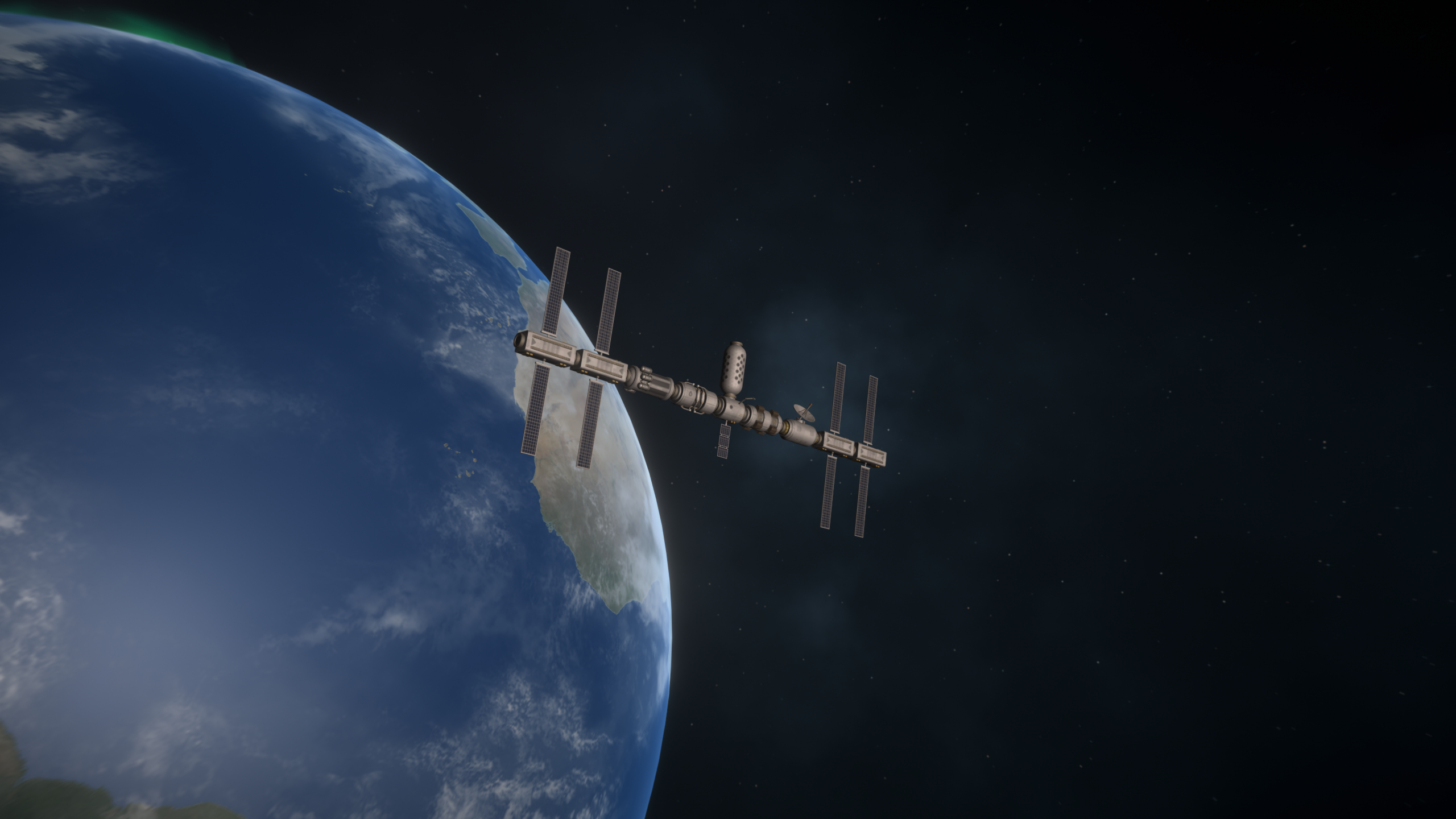
Space Stations, Mission Presets, Instant Orbital Transfers
Greetings Space Explorers!
A long-awaited new Major Update #2 has just been released! This build introduces all the newly announced features along with many tweaks and fixes!
NEW FEATURES:
Fixes:
Known issues:
Thank you for your ongoing support. We hope that this update will bring you tons of fun! We strongly encourage you to fill in the new in-game survey! You can access it from the FEEDBACK button in the main menu, or >>HERE<<.
See you in space!
SpaceOps Team
Thu, September 10, 2026
Space Stations, Mission Presets, Instant Orbital Transfers
Greetings Space Explorers!
A long-awaited new Major Update #2 has just been released! This build introduces all the newly announced features along with many tweaks and fixes!
NEW FEATURES:
- added Space Stations with their respective research
- instant free drag-and-drop transfers of modules and resources from orbit to surface, between orbiting bodies, or, in some cases, surface to orbit (space elevators, Electromagnetic Catapults)
- added a possibility to save and load mission presets
- shift + click for auto-creation of missions with missing resources to planned orbital constructions (requires resources on the parent body surface)
- added constant acceleration flights to cyclical missions
- added an option to take fuel for return flights for cyclical missions
- planning construction without resources
- added a minimum fuel marker to the fuel slider
- added orbit highlight for drag and drop
- new tooltips
- current/required resources value for ideal atmospheric pressure
- communication satellites income in tooltip/info panel
- space elevator contract adjustments
- added filtering by deposits in search window
- fuel production balance - nerfed to follow the law of mass action and produce extra oxygen
- major objects panel and objects in info panel header adjustment
- faster save loading/creation
- building orbital construction in orbit now requires orbital construction
- origin/target in mission window clickable
- search window text input field focused automatically after opening it
- changed visual button for switching to parent body
- notifications, when mined deposit depletes/changes
- scrapping space station and interstellar before it's fully built
- displaying up to 3 notifications at once without opening notifications
- orbital habitats name and description changed to differentiate from space stations
- added construction time in SC info panel
Fixes:
- cancelling a facility construction causing resource duplication
- duplicating object panel after scrapping a facility/module/SC/LV
- cyclical mission not using fastest preset correctly
- possibility to cancel construction of other corporations' facilities and modules
- improved clickability of (Orbit) label on models of objects
- pop-up background styles could look different
- you couldn't produce orbital spacecraft on an asteroid in orbit
- spacecraft construction module disappearing
- you couldn't scrap multiple SC/LVs
- facilities with power storage keep working when disabled
- fuel cost could not display for some LV combination with orbital payload container
- radioisotope generators stopped working
- facilities showing drag and drop info in tooltips
- comm sat natural growth bonus issues
- removed interstellar ship fake orbit
- facilities' background flickering due to energy calculations
- energy production/usage not synced with production cycle
- camera spinning very fast with comet on objects' orbits
- atlas not using hydrogen to pull asteroids
- space station ghost of modules visible after canceling stacked construction
- construction in orbit stopped if an asteroid fell from orbit to object
- radioisotope generators existing in saves stopped working
- orbital payload container could require fuel
- autobuying resources didn't check if they're on market
- you could scrap a facility not meant for scrapping
- atmospheric composition now displays properly
- orbital construction/telescope sent to orbit via instant transfer didn't work in orbit
- failed mission draining fuel
- ability to create broken cyclical mission
- space station mounted modules count could be exceeded
- facility/module panel during construction would not update properly
- you could open Trappist panel from Earth
- you could open bugged marketplace
Known issues:
- unclear communication of the auto-mission to orbit feature
- cargo delivered to orbital spacecraft from the surface might exceed the LV capabilities
- some of the translated texts might be inaccurate
- minimum fuel marker can disappear
- fuel cost tooltip may show the same info twice
- orbit drag-and-drop can sometimes remain visible
- AI using space station modules as normal modules
- population growth can be high
- comm sats incorrectly show population growth multiplier (total multiplier on tooltip for humans shown correctly)
- you can drop modules/resources on planets for which mission planning is not possible
- AL-Ice LV cost is different in info panel
- CNSA doesn't have cyclical missions on The Expansion or later
- spacecraft can show up with a delay after completing a mission
- gravity assist can remove spacecraft if continuing with only a part of the fleet
- Phobos carbon completes with any cyclical mission
- crew compartments duplication with orbital payload container/EMC
- editing offer in marketplace can show incorrect data
- constant acceleration in interstellar is not available instantly
- space station/interstellar cannot be accessed in solar orbit
- interstellar won't work for other corporations
Thank you for your ongoing support. We hope that this update will bring you tons of fun! We strongly encourage you to fill in the new in-game survey! You can access it from the FEEDBACK button in the main menu, or >>HERE<<.
See you in space!
SpaceOps Team
#34
Histwar : Napoleonics by JMM / The Grognards of the Imperial ...
Last post by Asid - September 10, 2026, 07:35:10 PMThe Grognards of the Imperial Guard: when and how to engage them?
September 10, 2026

The Grognards of the Imperial Guard: when and how to engage them?
Introduction
Among the most famous soldiers in military history, the Grognards of the Imperial Guard hold a special place. Veterans of the Napoleonic campaigns, admired for their endurance, discipline, and experience, they formed the heart of the French Imperial Guard. Their reputation was such that their mere appearance on the battlefield could be enough to cause panic among the enemy.
However, the Grognards were not intended to be engaged at the beginning of combat. Their deployment followed a precise logic: to preserve an elite reserve capable of intervening at the decisive moment, restoring a compromised situation, or delivering the final blow. Understanding when and how to engage these troops provides a better grasp of Napoleonic strategy and the Guard's particular role.
Over time, the strength of the Imperial Guard significantly increased.
This increase led to the creation of Middle and Young Guard units.
Of course, these new units did not have the same value as the Old Guard.
Who were the Grognards?
The term "Grognards" primarily refers to the experienced soldiers of the Old Guard, the most prestigious component of the Imperial Guard. Their nickname came from their habit of complaining—or "grousing"—about service conditions, orders, or their superiors' decisions. This attitude, however, did not indicate a lack of loyalty. On the contrary, these men were deeply devoted to Napoleon and their unit.
The Grognards were distinguished by several characteristics:
- extensive campaign experience;
- excellent mastery of combat in line and column;
- great physical and moral resilience;
- solid discipline;
- strong group cohesion;
- exceptional trust in their leaders.
They were not invincible, but their military value rested on their ability to remain organized and effective in the most difficult situations.
The Imperial Guard: a strategic reserve
The Imperial Guard constituted a tactical reserve directly under the Emperor's authority. Napoleon could use it when other troops had already engaged in combat, but he generally avoided committing it too early.
This restraint had several reasons. First, the Guard had to remain available to respond to unforeseen crises. Second, its presence posed a permanent threat to the enemy. As long as the Guard was not engaged, the enemy had to assume that Napoleon still retained a force capable of intervening. Finally, the premature use of these veterans risked exposing them to attrition, whereas their value lay precisely in their freshness and experience.
In Napoleonic thinking, the Guard thus represented both a fighting force and an insurance against defeat.
When to engage the Grognards?
1. To decide an already prepared battle
The Grognards were to be engaged when the conditions for victory were met. It was not about haphazardly throwing them into the fray, but employing them after methodical preparation: weakening the enemy, reconnaissance of their positions, and progressive engagement of other corps.
The objective was to bring the Guard into action at the moment its action could produce a decisive effect. It had to exploit a breach, reinforce a difficult sector, or finish off an already disorganized army.
2. To restore a critical situation
The Guard could also be used to contain a serious crisis. If a wing of the army was threatened with collapse or if an essential position risked being lost, the Grognards could intervene to stabilize the front.
In this role, their experience was essential. They knew how to maintain their formations under fire, resist pressure, and gain time to allow for the arrival of reinforcements or the reorganization of struggling units.
3. To protect a retreat
In certain circumstances, the Guard was tasked with covering the army's withdrawal. This was a particularly demanding mission: slowing down the enemy, maintaining a defensive line, and preventing a retreat from turning into a rout.
The discipline of the Grognards allowed them to perform this function effectively. They could form a last rampart, hold villages, bridges, or crossroads, and then withdraw in an orderly manner.
4. To deliver the final blow
The most prestigious use of the Guard was to launch the decisive attack. After several hours of fighting, when the adversary was exhausted, the Guard could appear to break their formation.
This intervention had a material, but also psychological, impact. Enemy soldiers knew the reputation of these veterans. Seeing the bearskins of the Old Guard advance could cause a drop in morale, especially if their own lines were already weakened.
How to engage them?
1. Preparation by other troops
The Grognards were not to be used alone without reason. Their engagement was usually prepared by line units, cavalry, and artillery.
Infantry could fix the enemy and prevent them from maneuvering. Artillery weakened their formations and created exploitable spaces. Cavalry could disorganize their flanks or pursue an already retreating unit. The Guard then intervened to turn this disorganization into victory.
This cooperation prevented the veterans from suffering unnecessary losses in frontal assaults against intact positions.
2. Maintaining a solid formation
The strength of the Grognards lay in their cohesion. They therefore had to be engaged in compact formations, capable of advancing under fire and resisting counter-attacks.
Depending on the situation, they could act:
- in column to produce an offensive shock;
- in line to maximize their firepower;
- in square to resist cavalry;
- in detachments to support several sectors;
- in close reserve to intervene quickly.
The choice of formation depended on the terrain, the mission, and the enemy threat. A column facilitated movement and moral impact, while a line allowed for greater exploitation of fire.
3. With limited and precise objectives
The Grognards were not to be dispersed across a multitude of missions. Their employment was most effective when they received a clear objective: capturing a dominant position, breaking a center, supporting a flank, or securing a retreat.
This precision was all the more important because the veterans represented a resource that was difficult to replace. Their engagement had to produce a result superior to the human and material cost involved.
4. Under direct command
Napoleon maintained tight control over the Guard. Its engagement could depend on a personal decision, as the Guard constituted his ultimate reserve. The generals who commanded it enjoyed considerable prestige, but they also had to adhere to strict discipline.
The bond between the Grognards and their leaders was based on trust. These soldiers accepted enduring marches, cold, hunger, and enemy fire because they believed that their leaders knew their worth and would not sacrifice them unnecessarily.
The limits of their employment
The reputation of the Imperial Guard sometimes created the image of a troop capable of resolving all situations. This view is exaggerated. The Grognards remained subject to the realities of the battlefield: numerical superiority of the enemy, artillery, difficult terrain, fatigue, and isolation.
Engaging them too early could have serious consequences. They risked suffering heavy losses before the decisive moment and no longer being available to respond to a crisis. A frontal attack against an intact position could also diminish their advantage.
The Guard should therefore not be considered a magic weapon, but a military instrument of great value, to be used with discernment.
Historical examples
1. Austerlitz, 1805
At Austerlitz, the Imperial Guard was held in reserve for much of the battle. Napoleon used it at the moment when the situation required stabilizing the center of the conflict. Its existence weighed on the course of the combat, even when it was not directly involved in the action.
2. Eylau, 1807
At Eylau, the Guard helped to contain a particularly dangerous situation. The battle was marked by fierce fighting and considerable losses. The intervention of elite troops helped support the French formation when the outcome of the battle remained uncertain.
3. Wagram, 1809
At Wagram, the Guard, especially the artillery, was also used judiciously. Furthermore, Napoleon avoided exposing it unnecessarily and kept it as a reserve force capable of intervening in threatened sectors or consolidating the final success.
4. Waterloo, 1815
Waterloo represents the most famous example of the ultimate use of the Guard. After a day of fighting, several units of the Middle and Old Guard were engaged in an attempt to break the Allied lines. The failure of this attack had immense military and psychological repercussions. The Guard, until then a symbol of imperial power, could not turn the tide.
However, it must be remembered that the defeat did not result solely from the Guard's intervention. The French army was already exhausted, the terrain difficult, Allied resistance solid, and the arrival of the Prussians decisive.
A military and psychological weapon
The importance of the Grognards extended beyond their tactical role. They were a symbol. Their presence reminded French soldiers of past victories and boosted the army's confidence. For the enemy, it represented a constant threat.
Napoleon could thus use the Guard without even having to commit it to battle immediately. Its mere presence in reserve influenced enemy decisions. The enemies knew that a final force, composed of seasoned veterans, could still enter the action.
This psychological dimension explains why the engagement of the Guard had to be carefully chosen. Once launched, it not only had to gain ground, but also produce a decisive effect on the morale of the entire battlefield.
Conclusion
The Grognards of the Imperial Guard were above all an elite reserve intended for decisive moments. They had to be engaged when the enemy was sufficiently weakened, when a crisis threatened the army, or when the battle could be definitively won by vigorous intervention.
Their effectiveness rested on several principles: preserving their freshness, engaging them with precise objectives, supporting them with artillery and other arms, maintaining their cohesion, and avoiding unnecessary sacrifices. Their reputation came not only from their bravery but also from their collective experience and their ability to act with discipline in the most dangerous situations.
The Grognards were therefore not a troop to be thrown into battle at the first shots. They were the Emperor's last argument—a force to be preserved, protected, and engaged when the fate of the battle could truly be decided.
The Grognards in HistWar
In HistWar, the Grognards of the Imperial Guard should be considered an elite reserve, not just additional infantry units.
Their engagement must occur at the moment when their experience and morale can turn the tide of battle: to
1. reinforce a threatened sector,
2. exploit a breach,
3. retake an essential position
4. deliver the final attack against an already disorganized adversary.
It is generally preferable to keep them back during the initial phases of combat, while positioning them close enough to the front to be able to intervene quickly.
Their effectiveness will be maximized if they are engaged on a precise objective and supported by artillery, cavalry, or line units tasked with fixing the enemy.
Conversely, committing them too early in a frontal attack or allowing them to become exhausted in secondary engagements amounts to wasting one of the army's best resources.
Perrine Mathe
September 10, 2026
The Grognards of the Imperial Guard: when and how to engage them?
Introduction
Among the most famous soldiers in military history, the Grognards of the Imperial Guard hold a special place. Veterans of the Napoleonic campaigns, admired for their endurance, discipline, and experience, they formed the heart of the French Imperial Guard. Their reputation was such that their mere appearance on the battlefield could be enough to cause panic among the enemy.
However, the Grognards were not intended to be engaged at the beginning of combat. Their deployment followed a precise logic: to preserve an elite reserve capable of intervening at the decisive moment, restoring a compromised situation, or delivering the final blow. Understanding when and how to engage these troops provides a better grasp of Napoleonic strategy and the Guard's particular role.
Over time, the strength of the Imperial Guard significantly increased.
This increase led to the creation of Middle and Young Guard units.
Of course, these new units did not have the same value as the Old Guard.
Who were the Grognards?
The term "Grognards" primarily refers to the experienced soldiers of the Old Guard, the most prestigious component of the Imperial Guard. Their nickname came from their habit of complaining—or "grousing"—about service conditions, orders, or their superiors' decisions. This attitude, however, did not indicate a lack of loyalty. On the contrary, these men were deeply devoted to Napoleon and their unit.
The Grognards were distinguished by several characteristics:
- extensive campaign experience;
- excellent mastery of combat in line and column;
- great physical and moral resilience;
- solid discipline;
- strong group cohesion;
- exceptional trust in their leaders.
They were not invincible, but their military value rested on their ability to remain organized and effective in the most difficult situations.
The Imperial Guard: a strategic reserve
The Imperial Guard constituted a tactical reserve directly under the Emperor's authority. Napoleon could use it when other troops had already engaged in combat, but he generally avoided committing it too early.
This restraint had several reasons. First, the Guard had to remain available to respond to unforeseen crises. Second, its presence posed a permanent threat to the enemy. As long as the Guard was not engaged, the enemy had to assume that Napoleon still retained a force capable of intervening. Finally, the premature use of these veterans risked exposing them to attrition, whereas their value lay precisely in their freshness and experience.
In Napoleonic thinking, the Guard thus represented both a fighting force and an insurance against defeat.
When to engage the Grognards?
1. To decide an already prepared battle
The Grognards were to be engaged when the conditions for victory were met. It was not about haphazardly throwing them into the fray, but employing them after methodical preparation: weakening the enemy, reconnaissance of their positions, and progressive engagement of other corps.
The objective was to bring the Guard into action at the moment its action could produce a decisive effect. It had to exploit a breach, reinforce a difficult sector, or finish off an already disorganized army.
2. To restore a critical situation
The Guard could also be used to contain a serious crisis. If a wing of the army was threatened with collapse or if an essential position risked being lost, the Grognards could intervene to stabilize the front.
In this role, their experience was essential. They knew how to maintain their formations under fire, resist pressure, and gain time to allow for the arrival of reinforcements or the reorganization of struggling units.
3. To protect a retreat
In certain circumstances, the Guard was tasked with covering the army's withdrawal. This was a particularly demanding mission: slowing down the enemy, maintaining a defensive line, and preventing a retreat from turning into a rout.
The discipline of the Grognards allowed them to perform this function effectively. They could form a last rampart, hold villages, bridges, or crossroads, and then withdraw in an orderly manner.
4. To deliver the final blow
The most prestigious use of the Guard was to launch the decisive attack. After several hours of fighting, when the adversary was exhausted, the Guard could appear to break their formation.
This intervention had a material, but also psychological, impact. Enemy soldiers knew the reputation of these veterans. Seeing the bearskins of the Old Guard advance could cause a drop in morale, especially if their own lines were already weakened.
How to engage them?
1. Preparation by other troops
The Grognards were not to be used alone without reason. Their engagement was usually prepared by line units, cavalry, and artillery.
Infantry could fix the enemy and prevent them from maneuvering. Artillery weakened their formations and created exploitable spaces. Cavalry could disorganize their flanks or pursue an already retreating unit. The Guard then intervened to turn this disorganization into victory.
This cooperation prevented the veterans from suffering unnecessary losses in frontal assaults against intact positions.
2. Maintaining a solid formation
The strength of the Grognards lay in their cohesion. They therefore had to be engaged in compact formations, capable of advancing under fire and resisting counter-attacks.
Depending on the situation, they could act:
- in column to produce an offensive shock;
- in line to maximize their firepower;
- in square to resist cavalry;
- in detachments to support several sectors;
- in close reserve to intervene quickly.
The choice of formation depended on the terrain, the mission, and the enemy threat. A column facilitated movement and moral impact, while a line allowed for greater exploitation of fire.
3. With limited and precise objectives
The Grognards were not to be dispersed across a multitude of missions. Their employment was most effective when they received a clear objective: capturing a dominant position, breaking a center, supporting a flank, or securing a retreat.
This precision was all the more important because the veterans represented a resource that was difficult to replace. Their engagement had to produce a result superior to the human and material cost involved.
4. Under direct command
Napoleon maintained tight control over the Guard. Its engagement could depend on a personal decision, as the Guard constituted his ultimate reserve. The generals who commanded it enjoyed considerable prestige, but they also had to adhere to strict discipline.
The bond between the Grognards and their leaders was based on trust. These soldiers accepted enduring marches, cold, hunger, and enemy fire because they believed that their leaders knew their worth and would not sacrifice them unnecessarily.
The limits of their employment
The reputation of the Imperial Guard sometimes created the image of a troop capable of resolving all situations. This view is exaggerated. The Grognards remained subject to the realities of the battlefield: numerical superiority of the enemy, artillery, difficult terrain, fatigue, and isolation.
Engaging them too early could have serious consequences. They risked suffering heavy losses before the decisive moment and no longer being available to respond to a crisis. A frontal attack against an intact position could also diminish their advantage.
The Guard should therefore not be considered a magic weapon, but a military instrument of great value, to be used with discernment.
Historical examples
1. Austerlitz, 1805
At Austerlitz, the Imperial Guard was held in reserve for much of the battle. Napoleon used it at the moment when the situation required stabilizing the center of the conflict. Its existence weighed on the course of the combat, even when it was not directly involved in the action.
2. Eylau, 1807
At Eylau, the Guard helped to contain a particularly dangerous situation. The battle was marked by fierce fighting and considerable losses. The intervention of elite troops helped support the French formation when the outcome of the battle remained uncertain.
3. Wagram, 1809
At Wagram, the Guard, especially the artillery, was also used judiciously. Furthermore, Napoleon avoided exposing it unnecessarily and kept it as a reserve force capable of intervening in threatened sectors or consolidating the final success.
4. Waterloo, 1815
Waterloo represents the most famous example of the ultimate use of the Guard. After a day of fighting, several units of the Middle and Old Guard were engaged in an attempt to break the Allied lines. The failure of this attack had immense military and psychological repercussions. The Guard, until then a symbol of imperial power, could not turn the tide.
However, it must be remembered that the defeat did not result solely from the Guard's intervention. The French army was already exhausted, the terrain difficult, Allied resistance solid, and the arrival of the Prussians decisive.
A military and psychological weapon
The importance of the Grognards extended beyond their tactical role. They were a symbol. Their presence reminded French soldiers of past victories and boosted the army's confidence. For the enemy, it represented a constant threat.
Napoleon could thus use the Guard without even having to commit it to battle immediately. Its mere presence in reserve influenced enemy decisions. The enemies knew that a final force, composed of seasoned veterans, could still enter the action.
This psychological dimension explains why the engagement of the Guard had to be carefully chosen. Once launched, it not only had to gain ground, but also produce a decisive effect on the morale of the entire battlefield.
Conclusion
The Grognards of the Imperial Guard were above all an elite reserve intended for decisive moments. They had to be engaged when the enemy was sufficiently weakened, when a crisis threatened the army, or when the battle could be definitively won by vigorous intervention.
Their effectiveness rested on several principles: preserving their freshness, engaging them with precise objectives, supporting them with artillery and other arms, maintaining their cohesion, and avoiding unnecessary sacrifices. Their reputation came not only from their bravery but also from their collective experience and their ability to act with discipline in the most dangerous situations.
The Grognards were therefore not a troop to be thrown into battle at the first shots. They were the Emperor's last argument—a force to be preserved, protected, and engaged when the fate of the battle could truly be decided.
The Grognards in HistWar
In HistWar, the Grognards of the Imperial Guard should be considered an elite reserve, not just additional infantry units.
Their engagement must occur at the moment when their experience and morale can turn the tide of battle: to
1. reinforce a threatened sector,
2. exploit a breach,
3. retake an essential position
4. deliver the final attack against an already disorganized adversary.
It is generally preferable to keep them back during the initial phases of combat, while positioning them close enough to the front to be able to intervene quickly.
Their effectiveness will be maximized if they are engaged on a precise objective and supported by artillery, cavalry, or line units tasked with fixing the enemy.
Conversely, committing them too early in a frontal attack or allowing them to become exhausted in secondary engagements amounts to wasting one of the army's best resources.
Perrine Mathe
#35
Games Discussion / Re: Flashpoint Campaigns: Cold...
Last post by Asid - September 10, 2026, 12:02:34 AMDev Diary: The Dutch Challenge
Wed, September 9, 2026
The biggest Flashpoint Campaigns title expands even further!
The Lowland Lions DLC extends the Third World War area of operations into northern Germany, whose defensive responsibility falls to I Corps of the Royal Netherlands Army. A new 3-scenario Dutch campaign loosely aligns with the historic doctrine in the event of combat erupting in this sector, and there are additional Dutch force standalone scenarios to test your mettle.
Beyond the Dutch AO are two new campaigns, one for the Belgian forces and another West German 'Wolves' campaign loosely inspired by a classic Flashpoint Campaigns: Red Storm campaign. Finally, we have 8 standalone scenarios featuring US forces also carrying on the Red Storm spirit.
Tune in to the Home of Wargamers livestream event on September 30th, 2026 for an exclusive feature showcase with On Target Simulations — you won't want to miss it!
Until then, let's take a deeper dive into the new frontlines...
The new Area of Responsibility
As the geography shifts northward, the mountain passes start to break into forests, rivers, and plains. The change of terrain means your command style will also need to adapt across the 6 new maps spanning the Dutch sector.

Battle for the Elbe-Seitenkanal Bridges
One of the most intense Dutch standalone scenarios takes place in the Uelzen area of operations, as you take command of a critical defensive line during the second day of the war. Your objective is to hold critical crossing points along the Elbe-Seitenkanal. Attached below is the topographic briefing map to study and consider your defensive course of action for this critical operation.

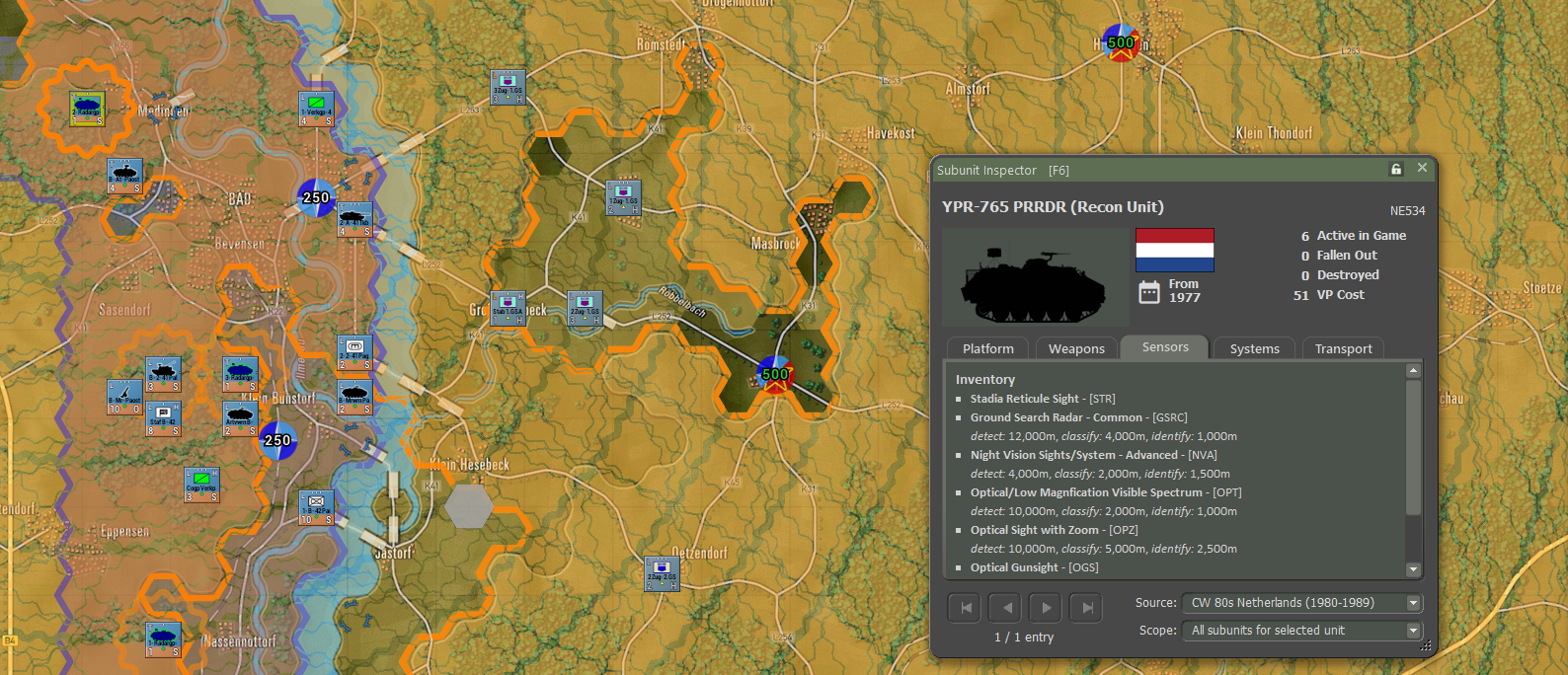
Painting the landscape in an appropriate orange tone are the radar emission coverage areas for the YPR-765 ground search radar. These mobile reconnaissance units are ideally deployed within concealment on terrain where they can detect across a vast area to identify enemy unit types at up to 4 km. With this valuable intelligence, you can maneuver your forces into the best locations to disrupt the enemy's approach.
Lions Roar ORBAT
The Dutch campaign features some of the largest formations you'll command in Flashpoint Campaigns. The culminating scenario, Lions Roar, is a multinational effort with Dutch and West German forces launching a counter-attack near Schwarmstedt. Study the detailed order of battle below.

Belgian 1ste Pantserinfanteriebrigade ORBAT
In addition to the Dutch content, Lowland Lions includes a new campaign for the Belgian forces. Command your mechanized infantry Brigade through 4 challenging scenarios. Remember, the result of one scenario will carry on to the next, so your command decisions influenced by force preservation are essential.

Red Storm Revivals
Rounding out the DLC are 8 new standalone scenarios featuring US forces, inspired by classic Flashpoint Campaigns: Red Storm scenarios.
Every battlefield tells a story, here is the 12 Bravo scenario aftermath.

Wishlist Lowland Lions on Steam now.
Don't forget to tune in to the Home of Wargamers livestream on September 30th for an exclusive showcase!
Wed, September 9, 2026
The biggest Flashpoint Campaigns title expands even further!
The Lowland Lions DLC extends the Third World War area of operations into northern Germany, whose defensive responsibility falls to I Corps of the Royal Netherlands Army. A new 3-scenario Dutch campaign loosely aligns with the historic doctrine in the event of combat erupting in this sector, and there are additional Dutch force standalone scenarios to test your mettle.
Beyond the Dutch AO are two new campaigns, one for the Belgian forces and another West German 'Wolves' campaign loosely inspired by a classic Flashpoint Campaigns: Red Storm campaign. Finally, we have 8 standalone scenarios featuring US forces also carrying on the Red Storm spirit.
Tune in to the Home of Wargamers livestream event on September 30th, 2026 for an exclusive feature showcase with On Target Simulations — you won't want to miss it!
Until then, let's take a deeper dive into the new frontlines...
The new Area of Responsibility
As the geography shifts northward, the mountain passes start to break into forests, rivers, and plains. The change of terrain means your command style will also need to adapt across the 6 new maps spanning the Dutch sector.
- Suhlendorf
- Uelzen
- Amelinghausen
- Soltau
- Buchholz in der Nordheide
- Schwarmstedt
- Cloppenburg
Battle for the Elbe-Seitenkanal Bridges
One of the most intense Dutch standalone scenarios takes place in the Uelzen area of operations, as you take command of a critical defensive line during the second day of the war. Your objective is to hold critical crossing points along the Elbe-Seitenkanal. Attached below is the topographic briefing map to study and consider your defensive course of action for this critical operation.
Painting the landscape in an appropriate orange tone are the radar emission coverage areas for the YPR-765 ground search radar. These mobile reconnaissance units are ideally deployed within concealment on terrain where they can detect across a vast area to identify enemy unit types at up to 4 km. With this valuable intelligence, you can maneuver your forces into the best locations to disrupt the enemy's approach.
Lions Roar ORBAT
The Dutch campaign features some of the largest formations you'll command in Flashpoint Campaigns. The culminating scenario, Lions Roar, is a multinational effort with Dutch and West German forces launching a counter-attack near Schwarmstedt. Study the detailed order of battle below.
Belgian 1ste Pantserinfanteriebrigade ORBAT
In addition to the Dutch content, Lowland Lions includes a new campaign for the Belgian forces. Command your mechanized infantry Brigade through 4 challenging scenarios. Remember, the result of one scenario will carry on to the next, so your command decisions influenced by force preservation are essential.
Red Storm Revivals
Rounding out the DLC are 8 new standalone scenarios featuring US forces, inspired by classic Flashpoint Campaigns: Red Storm scenarios.
- 12 Bravo
- A Few Good Tanks
- A Test of Wills
- Ate Up
- Bread and Butter
- Dawns First Light
- Meeting of Titans
- Spartans at Norderfurt
Every battlefield tells a story, here is the 12 Bravo scenario aftermath.
Wishlist Lowland Lions on Steam now.
Don't forget to tune in to the Home of Wargamers livestream on September 30th for an exclusive showcase!
#36
Games Discussion / Re: Flashpoint Campaigns: Cold...
Last post by Asid - September 09, 2026, 04:09:12 PMAnnouncing Flashpoint Campaigns: Lowland Lions DLC
Fri, July 10, 2026

"Jeroen, do you hear the rumbling thunder? The forecast didn't call for a storm..." "Meneer – the fresh intelligence from our ground radar indicates it's certainly NOT thunder!"
July 20th, 1989 – 03:03 – Oldendorf, West Germany.
The Third World War erupts across the German Border, and the Dutch I Corps stands ready to meet the first Soviet assault. At the sharp end of the spear, the 103rd Reconnaissance Battalion is tasked with screening and delaying the advancing Warsaw Pact forces, while the 42nd Armored Battalion races forward to reinforce the line.
We are thrilled to officially announce Lowland Lions, the first major content expansion for Flashpoint Campaigns: Cold War.
Take command of Dutch, Belgian, West German, and U.S. forces in a massive collection of 25 new scenarios featuring fresh campaigns and intense standalone battles.
What's Inside Lowland Lions?
Help Us Shape the Launch – Wishlist Today.
The store pages are now live. You can help support the development and stay updated on the exact release date by adding Lowland Lions to your Wishlist right now.
Get ready, Commander. The storm is coming, and the Lowland Lions are ready to roar.
Flashpoint Campaigns: Cold War - Lowland Lions
Coming soon
The Third World War erupts across the German Border, and the Dutch I Corps stands to meet the first Soviet assault. Lowland Lions is the first DLC for Flashpoint Campaigns: Cold War.
Coming soon
Fri, July 10, 2026
"Jeroen, do you hear the rumbling thunder? The forecast didn't call for a storm..." "Meneer – the fresh intelligence from our ground radar indicates it's certainly NOT thunder!"
July 20th, 1989 – 03:03 – Oldendorf, West Germany.
The Third World War erupts across the German Border, and the Dutch I Corps stands ready to meet the first Soviet assault. At the sharp end of the spear, the 103rd Reconnaissance Battalion is tasked with screening and delaying the advancing Warsaw Pact forces, while the 42nd Armored Battalion races forward to reinforce the line.
We are thrilled to officially announce Lowland Lions, the first major content expansion for Flashpoint Campaigns: Cold War.
Take command of Dutch, Belgian, West German, and U.S. forces in a massive collection of 25 new scenarios featuring fresh campaigns and intense standalone battles.
What's Inside Lowland Lions?
- New Playable Faction: Deploy the new Dutch I Corps formations, units, and equipment.
- The Dutch Campaign: Lead the Netherlands forces through a tense 3-scenario campaign covering the opening hours of the war (all playable standalone).
- The Belgian Campaign: Fight across 4 scenarios as Belgian units struggle to contain the Soviet breakthrough.
- The West German Campaign: Shift focus to a West German "stay-behind" unit conducting unconventional defensive operations deep behind enemy lines (6 scenarios).
- Classic Tactical Scenarios: 12 standalone battles, including 8 scenarios featuring U.S. forces inspired by classic Flashpoint Campaigns: Red Storm gameplay.
Help Us Shape the Launch – Wishlist Today.
The store pages are now live. You can help support the development and stay updated on the exact release date by adding Lowland Lions to your Wishlist right now.
Get ready, Commander. The storm is coming, and the Lowland Lions are ready to roar.
Flashpoint Campaigns: Cold War - Lowland Lions
Coming soon
The Third World War erupts across the German Border, and the Dutch I Corps stands to meet the first Soviet assault. Lowland Lions is the first DLC for Flashpoint Campaigns: Cold War.
Coming soon
#37
Games Discussion / Re: Grand Tactician: Napoleoni...
Last post by Asid - September 09, 2026, 03:59:09 PMSeptember DevBlog - French Unit Roster
Wed, September 9, 2026
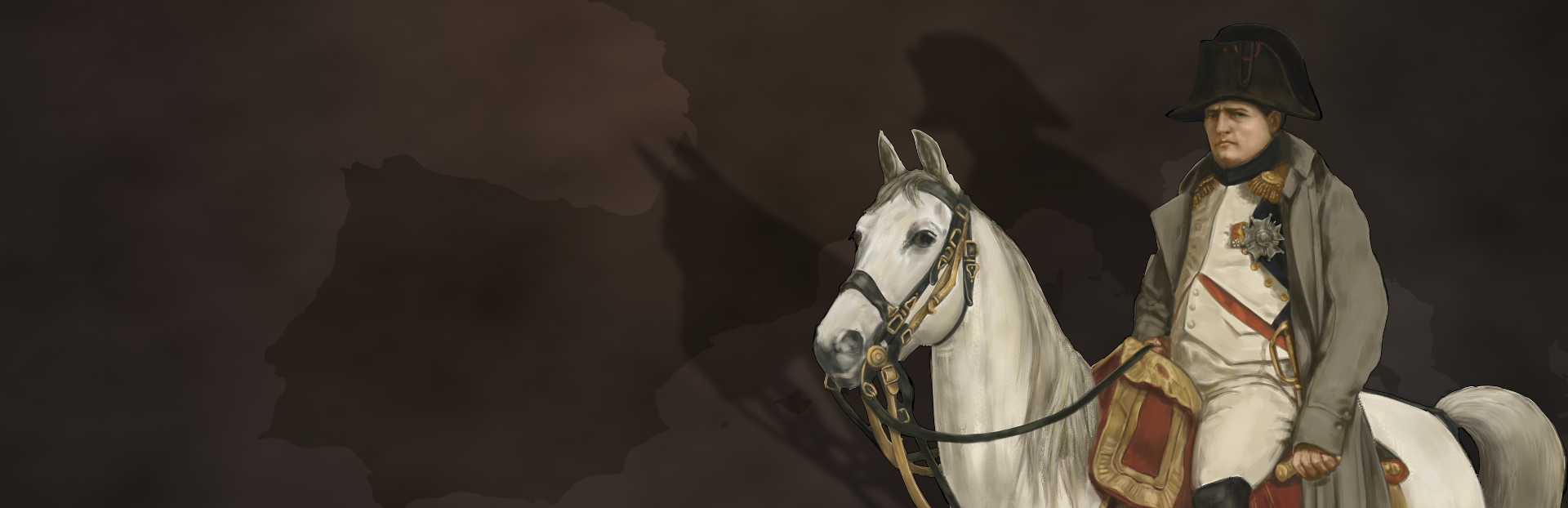
The native French units available in the Italian Campaign of 1796-97
Mon Général!
The first campaign in Grand Tactician: Napoleonic Wars is the Italian Campaign of 1796-97, where Napoleon gained great fame. While the regiments and uniforms of the later Grande Armée are the definition of Napoleonic era French unit roster and looks, Napoleon's Armée d'Italie was very different kind of beast. Let's have a look at the native French units available in this campaign, now that the artists have finished their work on them.
Infantry
It's worth noting that during the beginning of the Italian Campaign, the French military is still in the middle of a large reorganization (le deuxième amalgame). While the first amalgamation of French infantry in 1793 saw the organization of the infantry from regiments to demi-brigades, in which old regiments of the Ancien Régime were mixed with the new volunteer battalions, the second amalgamation of 1796 sees the collection of different infantry units, old and new, combined into 110 demi-brigades of the line and 30 light demi-brigades, with the aim of bringing them up to proper combat strength. This reorganization may make following the Italian campaign battle descriptions a bit difficult, as the same unit may appear with old and new names in different official documents, as well as newly named units still carrying their old flags.
While the demi-brigade is the main administrative unit, the main tactical unit is the infantry battalion. The French logistical system has been unable to keep up with the fast-growing numbers in the army. This is especially true in the case of the Armée d'Italie, a secondary front to the main theater on the other side of the Alps along the Rhine. For this reason, Napoleon's soldiers may resemble a rag-tag bunch in comparison to the later, well uniformed imperial armies.
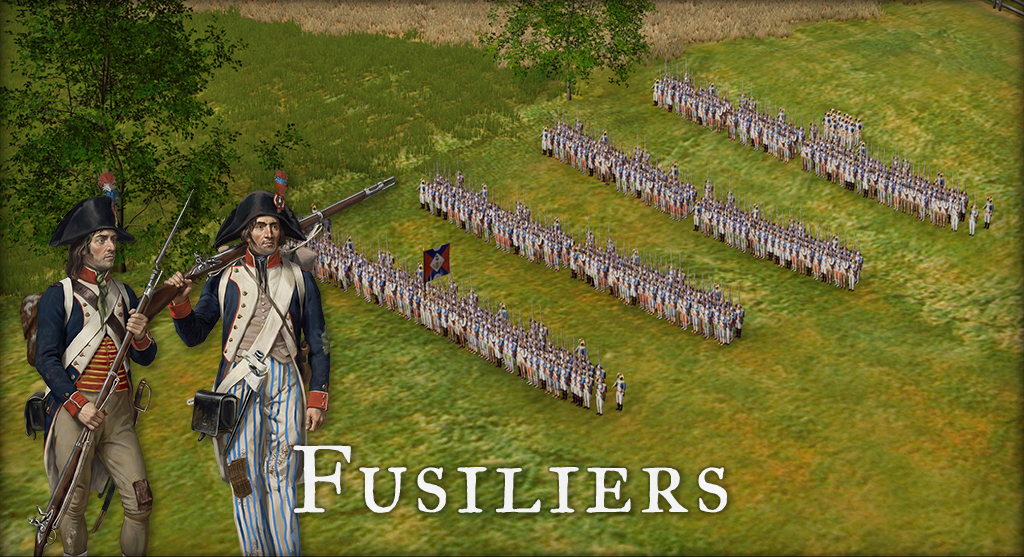
Type: Line Infantry
The basic line infantry demi-brigades consist of three fusilier battalions. Each battalion has eight fusilier companies and one elite grenadier company, with a total strength of over 1000 men, if at full strength (which is rare). Fusiliers fight in the line, but can also utilize open order where needed. They lack the formal light infantry training of the more specialized chasseurs.
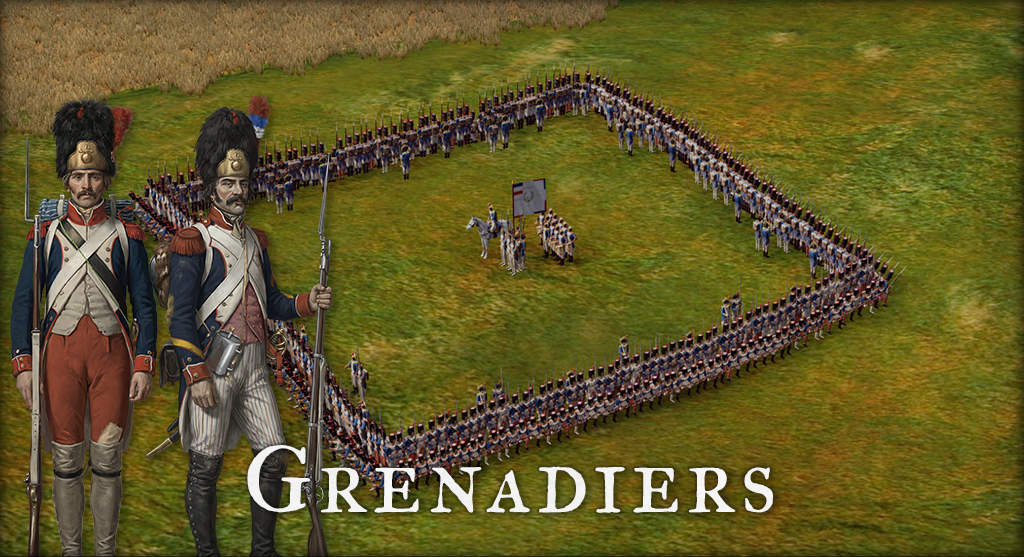
Type: Elite Infantry
Grenadiers are the most experienced and tallest soldiers of fusilier battalions. They wear the bearskin hat, which makes them appear even more intimidating. During the Italian Campaign, it became quite common to detach the elite grenadier companies of the fusilier battalions to form composite grenadier battalions. These grenadier units were often leading elements of assault columns, such as in the Battle of Lodi, or held as a decisive reserve, a role that would be given to Napoleon's guard later.
Type: Light Infantry
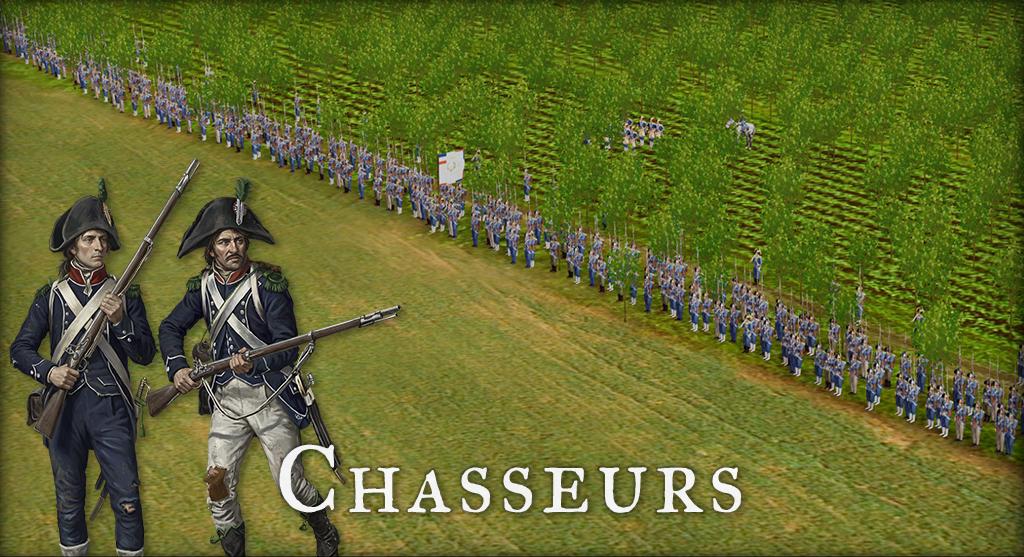
The organization of light (légère) and line (de ligne) demi-brigades was similar in numbers. However, instead of fusilier and grenadier companies, the light battalions contain chasseur and carabinier companies. The chasseurs are dual-purpose light infantry, trained in screening and skirmishing, but also capable of fighting in close order like the fusiliers.
Type: Elite Infantry
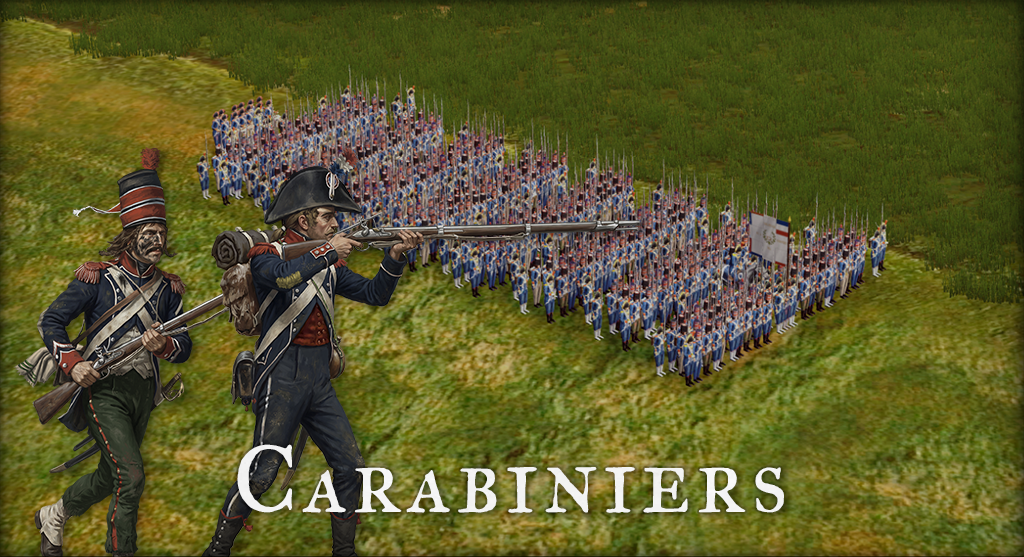
The best and most experienced marksmen among the chasseurs are formed into carabinier companies. Like the grenadiers in line battalions, the carabiniers can be detached to form composite elite battalions for the most demanding combat duties. As expert marksmen, they are the most capable skirmishers (tirailleurs) of the French army.
Cavalry
Cavalry retained their regimental organization during the revolutionary wars, and are split into heavy and light cavalry. Heavy cavalry is the battering ram of an army, charging knee-to-knee to break enemy formations with sheer weight of their formation. Light cavalry are the eyes and ears of an army, flexible in skirmishing, scouting and raiding, while effective at screening and pursuit during battles. At the beginning of the Italian campaign, Napoleon's cavalry is in a sorry state, with many troopers missing mounts. Due to the restrictive terrain in Italy, and the needs of the main theater, Napoleon has mostly light cavalry and dragoons available to him. But in the game, some heavy cavalry may appear as reinforcements also south of the Alps.
The main tactical unit of the cavalry is the squadron, formed of two companies of cavalry side by side, deploying in two lines. In the French system, officers form to the front of their units, increasing command and control and providing example to the troopers. A heavy regiment has three, and other regiments four squadrons in general.
Type: Heavy Cavalry
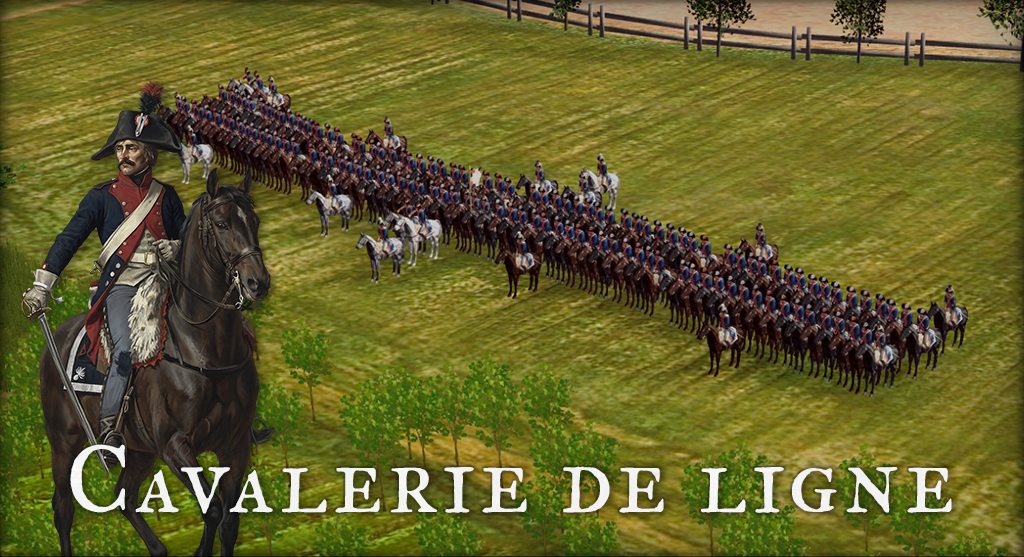
The "line cavalry" is the predecessor of Napoleon's later famous cuirassiers. During the revolution, the heavy cavalry was stripped of armour (except the 8th regiment, see below). Heavy cavalry has the largest chargers and strongest men in general, making the unit exceptionally strong in charge. They use a straight thrusting cavalry sword as their primary weapon, also commonly carrying pistols (and a number of troopers also carry carbines, though for campaign duties only.)
Type: Heavy Cavalry
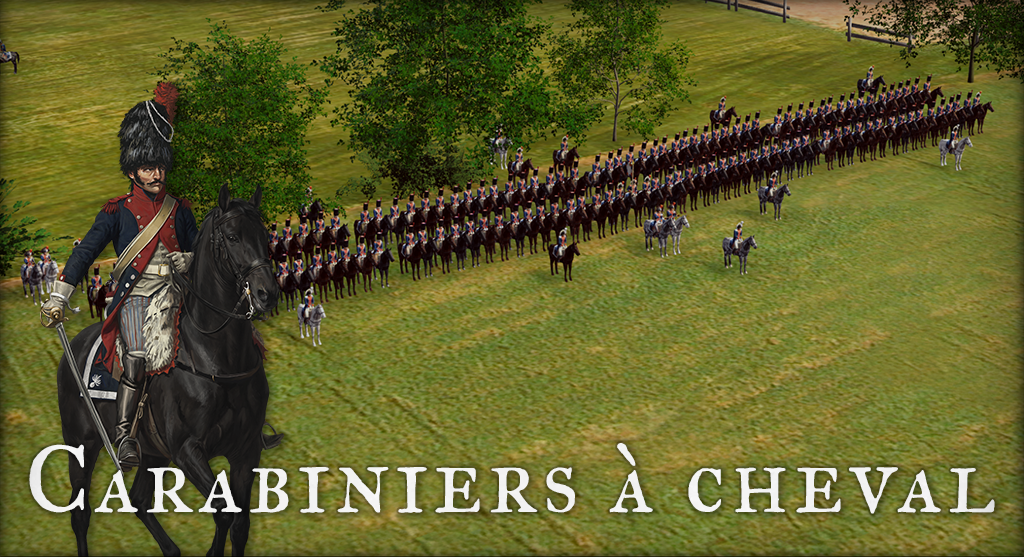
Originally the elite element of French light cavalry, armed with carbines as their name suggests. By the time of the revolutionary wars, the carabiniers were made an independent arm, forming two regiments of four squadrons each. They are the elite heavy cavalry, the "grenadiers of cavalry", tall horses ridden by tall men wearing bearskin hats. The carabiniers would retain their elite status until being disbanded in 1871.
Type: Heavy Cavalry
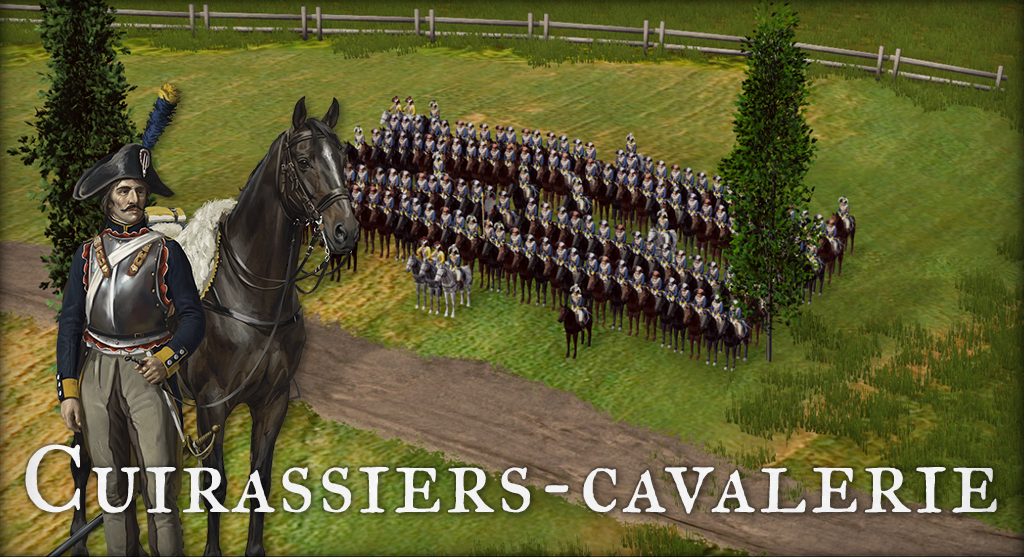
Formed from the Royal Cuirassiers Regiment, the 8e régiment de cavalerie was the only unit to retain the use of cuirass during the revolutionary wars. The cuirass consists of breast and back plates that can stop a bullet when fired from a distance, also protecting the torso against sword cuts and thrusts. Later, under Emperor Napoleon, the cuirass would make a grand comeback.
Type: Dragoons (Medium Cavalry)
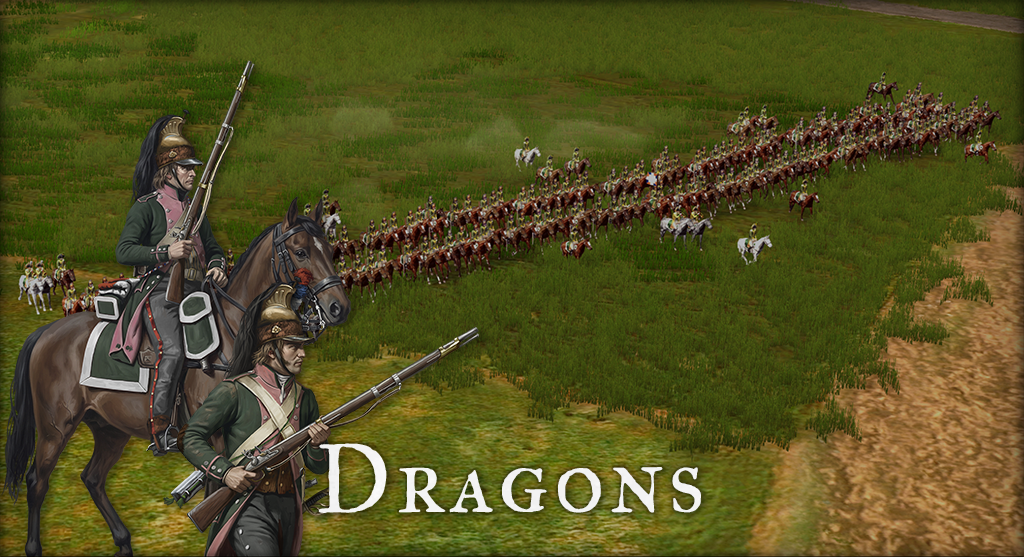
The multi-purpose cavalry of the French, dragoons can fight mounted as heavy cavalry like dragoons in most other nations do, but they have also retained the old dragoon role of mounted infantry. For this reason, the dragoons are a versatile tool for any French commander, allowing heavy hitting charges as well as dismounted skirmishing. For the latter purpose, they carry dragoon muskets, which are heavier and have longer range than basic cavalry carbines.

Type: Light Cavalry
The mounted chasseurs are the eyes and ears of an army. They are fast-moving and trained to skirmish while mounted, which makes them versatile in a battle. While mounted fire is usually rather ineffective due to low accuracy, it's possible to discourage enemy light cavalry from charging or to attrit infantry formed in square to break their cohesion.
Type: Light Cavalry
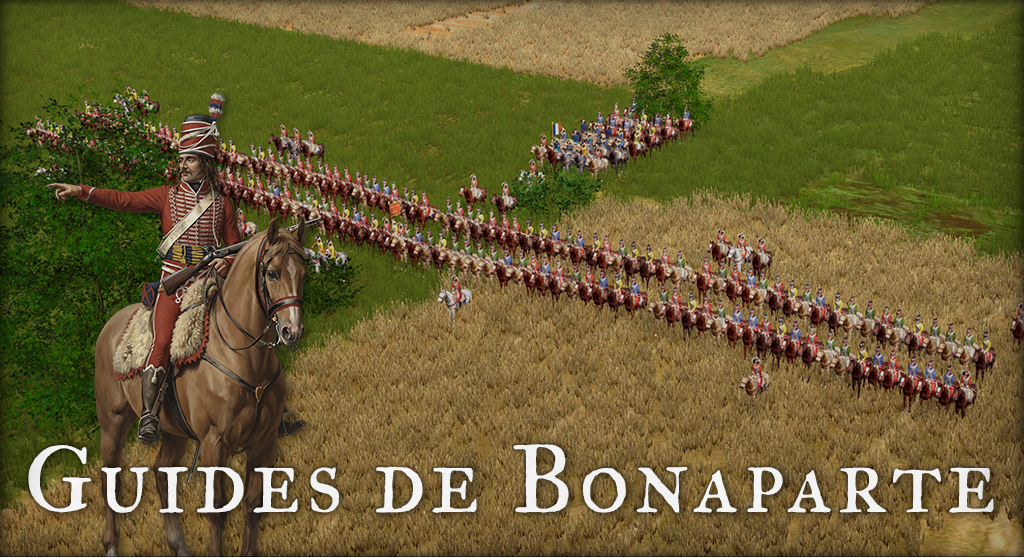
Soon after the beginning of the Italian Campaign, Napoleon organized a squadron (initially a company) of veteran mounted chasseurs to act as his personal guides. The role of the guides was manning outposts, to carry out reconnaissance for Napoleon himself and to escort him during the campaign. They were also occasionally used as a backup force for daring raids or as a reserve force in battle. The guides became known for their colourful and flamboyant uniforms.
Later, once Napoleon would reach the title of the First Consul, he would call back his guides to his side in the horse chasseurs of the Consular Guard, who would later become the horse chasseurs of the Imperial Guard.
Type: Light Cavalry
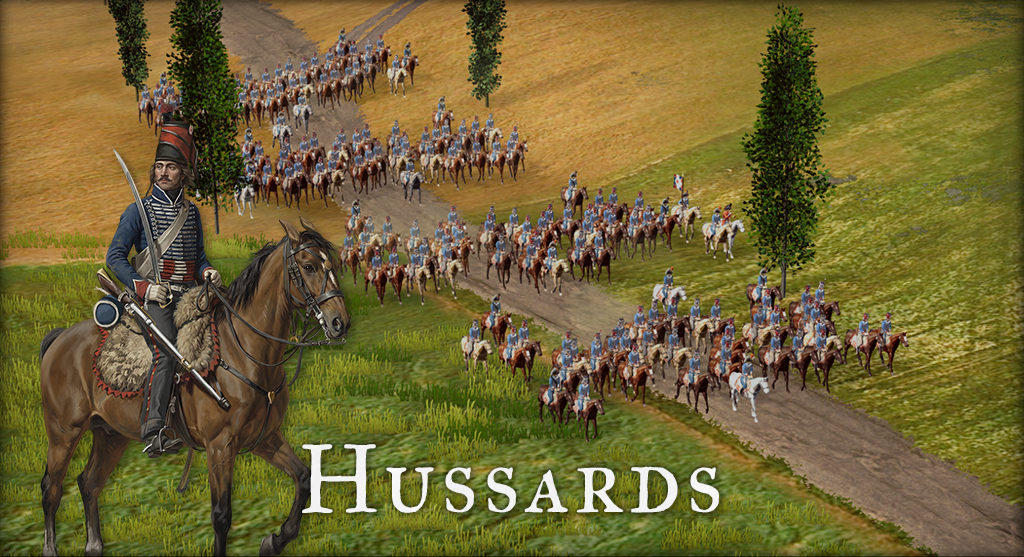
Like horse chasseurs, the hussars are a versatile light cavalry force. They are experts in raiding, screening and pursuit. While often armed with carbines, in battles they fight with cold steel, namely a curved cavalry sabre for slashing.
Artillery
The French artillery in 1796 is following the Gribeauval system, which standardizes the branch and weapons used. For field battles, the main armament are light 4-pounder cannons, medium 8-pounder cannons and heavier 12-pounder cannons. When forming batteries, the heavier cannons are usually paired with 6-inch howitzers, capable of firing explosive shells, which the cannons cannot not fire. Main ammunition is solid (round) shot, grapeshot and canister. The latter two are used with deadly effect when firing at enemy infantry at close range, transforming each cannon basically into a huge shotgun.
Napoleon, being an artillery officer by formal education, prefer centrally commanded large concentrations of artillery rather than evenly distributing the cannons he has among the different units. During this time it is common for infantry battalions to have two light cannons as regimental guns (a practice that started during the Thirty Years' War). Under Napoleon, it is more common to combine these regimental guns into ad hoc light batteries, increasing concentrated firepower but at the same time freeing the infantry from the burden of moving the cannons with the line of battle.
Type: Foot Artillery
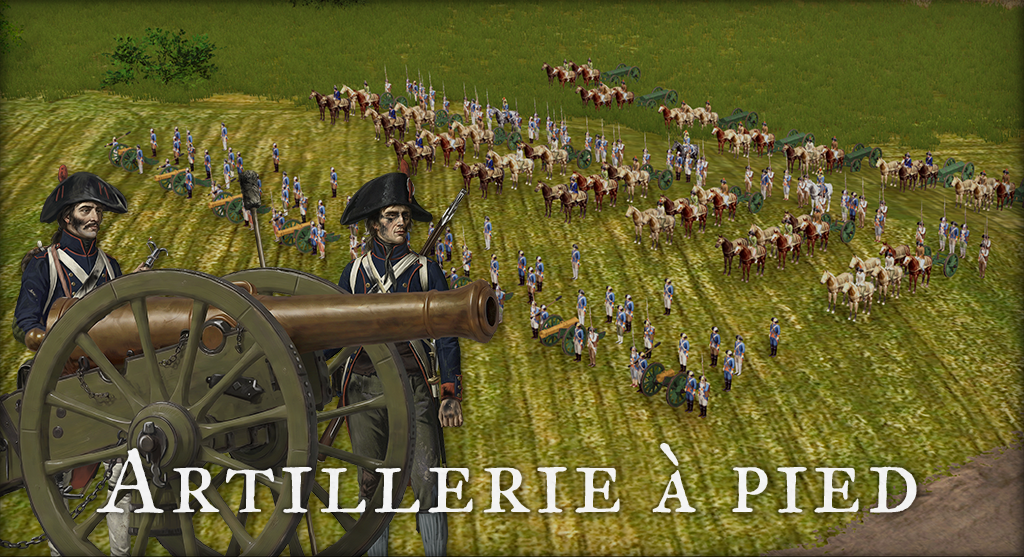
The foot artillery is formed into batteries combining artillery companies and civilian contractor manned train companies to move the cannons and ammunition, or by combining light regimental guns of multiple battalions. A full battery may contain up to six cannons and two howitzers. In battle, the batteries are also augmented with infantry soldiers to help move and defend the cannons. The guns are limbered up to move longer distances, and manhandled to move shorter distances. In foot artillery the gunners and assisting infantrymen walk alongside the limbers, reducing speed to that of walking.
Type: Horse Artillery
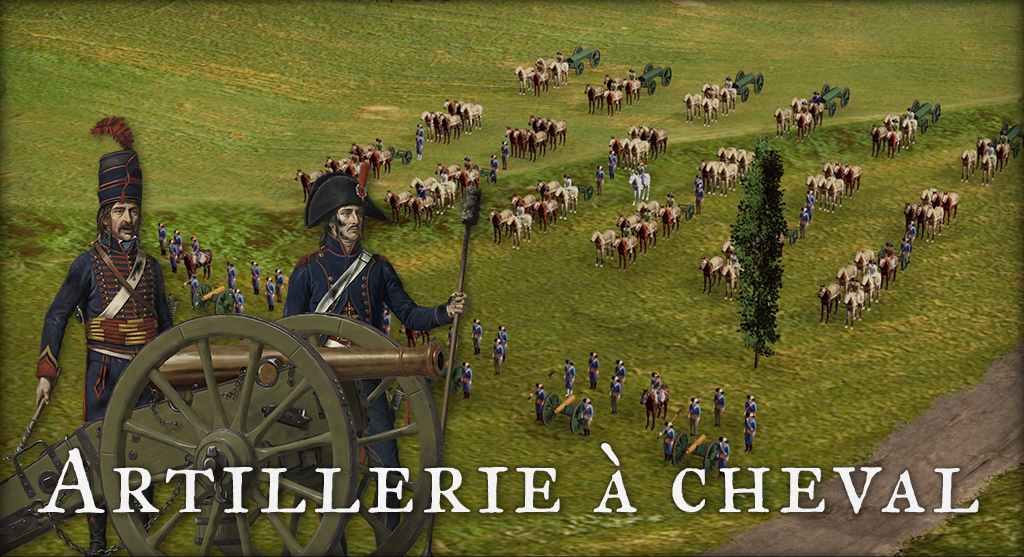
To support operations requiring fast movement, such as vanguard, rear-guard or cavalry actions, small part of the French artillery is organized into mounted (horse) artillery. The difference from foot artillery is that all the gunners have horses (or ride the caissons), which allows the unit to move with cavalry. For this reason, horse batteries use lighter cannon types and form smaller batteries.
...And There's More
The above are not the only units available for Napoleon, as can be seen in our recently released video, showing some of the additional units in the campaign:
Currently the artists' work continues with the Austrian roster, and we'll take a closer look at that a bit later. Though, you may already spot some of the new models and textures in our latest videos on YouTube.
Cheers,
Grand Engineer Corps
Wed, September 9, 2026
The native French units available in the Italian Campaign of 1796-97
Mon Général!
The first campaign in Grand Tactician: Napoleonic Wars is the Italian Campaign of 1796-97, where Napoleon gained great fame. While the regiments and uniforms of the later Grande Armée are the definition of Napoleonic era French unit roster and looks, Napoleon's Armée d'Italie was very different kind of beast. Let's have a look at the native French units available in this campaign, now that the artists have finished their work on them.
Infantry
It's worth noting that during the beginning of the Italian Campaign, the French military is still in the middle of a large reorganization (le deuxième amalgame). While the first amalgamation of French infantry in 1793 saw the organization of the infantry from regiments to demi-brigades, in which old regiments of the Ancien Régime were mixed with the new volunteer battalions, the second amalgamation of 1796 sees the collection of different infantry units, old and new, combined into 110 demi-brigades of the line and 30 light demi-brigades, with the aim of bringing them up to proper combat strength. This reorganization may make following the Italian campaign battle descriptions a bit difficult, as the same unit may appear with old and new names in different official documents, as well as newly named units still carrying their old flags.
While the demi-brigade is the main administrative unit, the main tactical unit is the infantry battalion. The French logistical system has been unable to keep up with the fast-growing numbers in the army. This is especially true in the case of the Armée d'Italie, a secondary front to the main theater on the other side of the Alps along the Rhine. For this reason, Napoleon's soldiers may resemble a rag-tag bunch in comparison to the later, well uniformed imperial armies.
Type: Line Infantry
The basic line infantry demi-brigades consist of three fusilier battalions. Each battalion has eight fusilier companies and one elite grenadier company, with a total strength of over 1000 men, if at full strength (which is rare). Fusiliers fight in the line, but can also utilize open order where needed. They lack the formal light infantry training of the more specialized chasseurs.
Type: Elite Infantry
Grenadiers are the most experienced and tallest soldiers of fusilier battalions. They wear the bearskin hat, which makes them appear even more intimidating. During the Italian Campaign, it became quite common to detach the elite grenadier companies of the fusilier battalions to form composite grenadier battalions. These grenadier units were often leading elements of assault columns, such as in the Battle of Lodi, or held as a decisive reserve, a role that would be given to Napoleon's guard later.
Type: Light Infantry
The organization of light (légère) and line (de ligne) demi-brigades was similar in numbers. However, instead of fusilier and grenadier companies, the light battalions contain chasseur and carabinier companies. The chasseurs are dual-purpose light infantry, trained in screening and skirmishing, but also capable of fighting in close order like the fusiliers.
Type: Elite Infantry
The best and most experienced marksmen among the chasseurs are formed into carabinier companies. Like the grenadiers in line battalions, the carabiniers can be detached to form composite elite battalions for the most demanding combat duties. As expert marksmen, they are the most capable skirmishers (tirailleurs) of the French army.
Cavalry
Cavalry retained their regimental organization during the revolutionary wars, and are split into heavy and light cavalry. Heavy cavalry is the battering ram of an army, charging knee-to-knee to break enemy formations with sheer weight of their formation. Light cavalry are the eyes and ears of an army, flexible in skirmishing, scouting and raiding, while effective at screening and pursuit during battles. At the beginning of the Italian campaign, Napoleon's cavalry is in a sorry state, with many troopers missing mounts. Due to the restrictive terrain in Italy, and the needs of the main theater, Napoleon has mostly light cavalry and dragoons available to him. But in the game, some heavy cavalry may appear as reinforcements also south of the Alps.
The main tactical unit of the cavalry is the squadron, formed of two companies of cavalry side by side, deploying in two lines. In the French system, officers form to the front of their units, increasing command and control and providing example to the troopers. A heavy regiment has three, and other regiments four squadrons in general.
Type: Heavy Cavalry
The "line cavalry" is the predecessor of Napoleon's later famous cuirassiers. During the revolution, the heavy cavalry was stripped of armour (except the 8th regiment, see below). Heavy cavalry has the largest chargers and strongest men in general, making the unit exceptionally strong in charge. They use a straight thrusting cavalry sword as their primary weapon, also commonly carrying pistols (and a number of troopers also carry carbines, though for campaign duties only.)
Type: Heavy Cavalry
Originally the elite element of French light cavalry, armed with carbines as their name suggests. By the time of the revolutionary wars, the carabiniers were made an independent arm, forming two regiments of four squadrons each. They are the elite heavy cavalry, the "grenadiers of cavalry", tall horses ridden by tall men wearing bearskin hats. The carabiniers would retain their elite status until being disbanded in 1871.
Type: Heavy Cavalry
Formed from the Royal Cuirassiers Regiment, the 8e régiment de cavalerie was the only unit to retain the use of cuirass during the revolutionary wars. The cuirass consists of breast and back plates that can stop a bullet when fired from a distance, also protecting the torso against sword cuts and thrusts. Later, under Emperor Napoleon, the cuirass would make a grand comeback.
Type: Dragoons (Medium Cavalry)
The multi-purpose cavalry of the French, dragoons can fight mounted as heavy cavalry like dragoons in most other nations do, but they have also retained the old dragoon role of mounted infantry. For this reason, the dragoons are a versatile tool for any French commander, allowing heavy hitting charges as well as dismounted skirmishing. For the latter purpose, they carry dragoon muskets, which are heavier and have longer range than basic cavalry carbines.
Type: Light Cavalry
The mounted chasseurs are the eyes and ears of an army. They are fast-moving and trained to skirmish while mounted, which makes them versatile in a battle. While mounted fire is usually rather ineffective due to low accuracy, it's possible to discourage enemy light cavalry from charging or to attrit infantry formed in square to break their cohesion.
Type: Light Cavalry
Soon after the beginning of the Italian Campaign, Napoleon organized a squadron (initially a company) of veteran mounted chasseurs to act as his personal guides. The role of the guides was manning outposts, to carry out reconnaissance for Napoleon himself and to escort him during the campaign. They were also occasionally used as a backup force for daring raids or as a reserve force in battle. The guides became known for their colourful and flamboyant uniforms.
Later, once Napoleon would reach the title of the First Consul, he would call back his guides to his side in the horse chasseurs of the Consular Guard, who would later become the horse chasseurs of the Imperial Guard.
Type: Light Cavalry
Like horse chasseurs, the hussars are a versatile light cavalry force. They are experts in raiding, screening and pursuit. While often armed with carbines, in battles they fight with cold steel, namely a curved cavalry sabre for slashing.
Artillery
The French artillery in 1796 is following the Gribeauval system, which standardizes the branch and weapons used. For field battles, the main armament are light 4-pounder cannons, medium 8-pounder cannons and heavier 12-pounder cannons. When forming batteries, the heavier cannons are usually paired with 6-inch howitzers, capable of firing explosive shells, which the cannons cannot not fire. Main ammunition is solid (round) shot, grapeshot and canister. The latter two are used with deadly effect when firing at enemy infantry at close range, transforming each cannon basically into a huge shotgun.
Napoleon, being an artillery officer by formal education, prefer centrally commanded large concentrations of artillery rather than evenly distributing the cannons he has among the different units. During this time it is common for infantry battalions to have two light cannons as regimental guns (a practice that started during the Thirty Years' War). Under Napoleon, it is more common to combine these regimental guns into ad hoc light batteries, increasing concentrated firepower but at the same time freeing the infantry from the burden of moving the cannons with the line of battle.
Type: Foot Artillery
The foot artillery is formed into batteries combining artillery companies and civilian contractor manned train companies to move the cannons and ammunition, or by combining light regimental guns of multiple battalions. A full battery may contain up to six cannons and two howitzers. In battle, the batteries are also augmented with infantry soldiers to help move and defend the cannons. The guns are limbered up to move longer distances, and manhandled to move shorter distances. In foot artillery the gunners and assisting infantrymen walk alongside the limbers, reducing speed to that of walking.
Type: Horse Artillery
To support operations requiring fast movement, such as vanguard, rear-guard or cavalry actions, small part of the French artillery is organized into mounted (horse) artillery. The difference from foot artillery is that all the gunners have horses (or ride the caissons), which allows the unit to move with cavalry. For this reason, horse batteries use lighter cannon types and form smaller batteries.
...And There's More
The above are not the only units available for Napoleon, as can be seen in our recently released video, showing some of the additional units in the campaign:
Currently the artists' work continues with the Austrian roster, and we'll take a closer look at that a bit later. Though, you may already spot some of the new models and textures in our latest videos on YouTube.
Cheers,
Grand Engineer Corps
#38
Games Discussion / Home of Wargamers 2026 is almo...
Last post by Asid - September 09, 2026, 12:48:02 AMHome of Wargamers 2026 is almost here
Tue, 8 September 2026
Home of Wargamers 2026 is almost here. Our yearly live showcase, streamed on Twitch and YouTube, returns on September 30th with fresh announcements, updates and a look behind the scenes at what's coming from Matrix Games.
This edition brings together longtime fan favorites and brand new projects. Developers and producers will step up to walk you through what they've been building, share previews, and talk about where their games are headed next.
On the schedule: Strategic Command, Armored Brigade II, Decision Point, Decisive Campaigns, Flashpoint Campaigns: Lowland Lions, Commander: Europe at War, Nuclear War Simulator and more, a mix of reveals, walkthroughs, and titles landing very soon.
Mark your calendar: September 30th, 2026 at 7 pm CEST.
Join us on YouTube and . See you there for an evening of strategy and wargaming.
Tue, 8 September 2026
Home of Wargamers 2026 is almost here. Our yearly live showcase, streamed on Twitch and YouTube, returns on September 30th with fresh announcements, updates and a look behind the scenes at what's coming from Matrix Games.
This edition brings together longtime fan favorites and brand new projects. Developers and producers will step up to walk you through what they've been building, share previews, and talk about where their games are headed next.
On the schedule: Strategic Command, Armored Brigade II, Decision Point, Decisive Campaigns, Flashpoint Campaigns: Lowland Lions, Commander: Europe at War, Nuclear War Simulator and more, a mix of reveals, walkthroughs, and titles landing very soon.
Mark your calendar: September 30th, 2026 at 7 pm CEST.
Join us on YouTube and . See you there for an evening of strategy and wargaming.
#39
Games Discussion / Re: Strategic Command WWII: Wa...
Last post by Asid - September 09, 2026, 12:47:52 AMUpdate v1.04.00
Tue, 8 September 2026
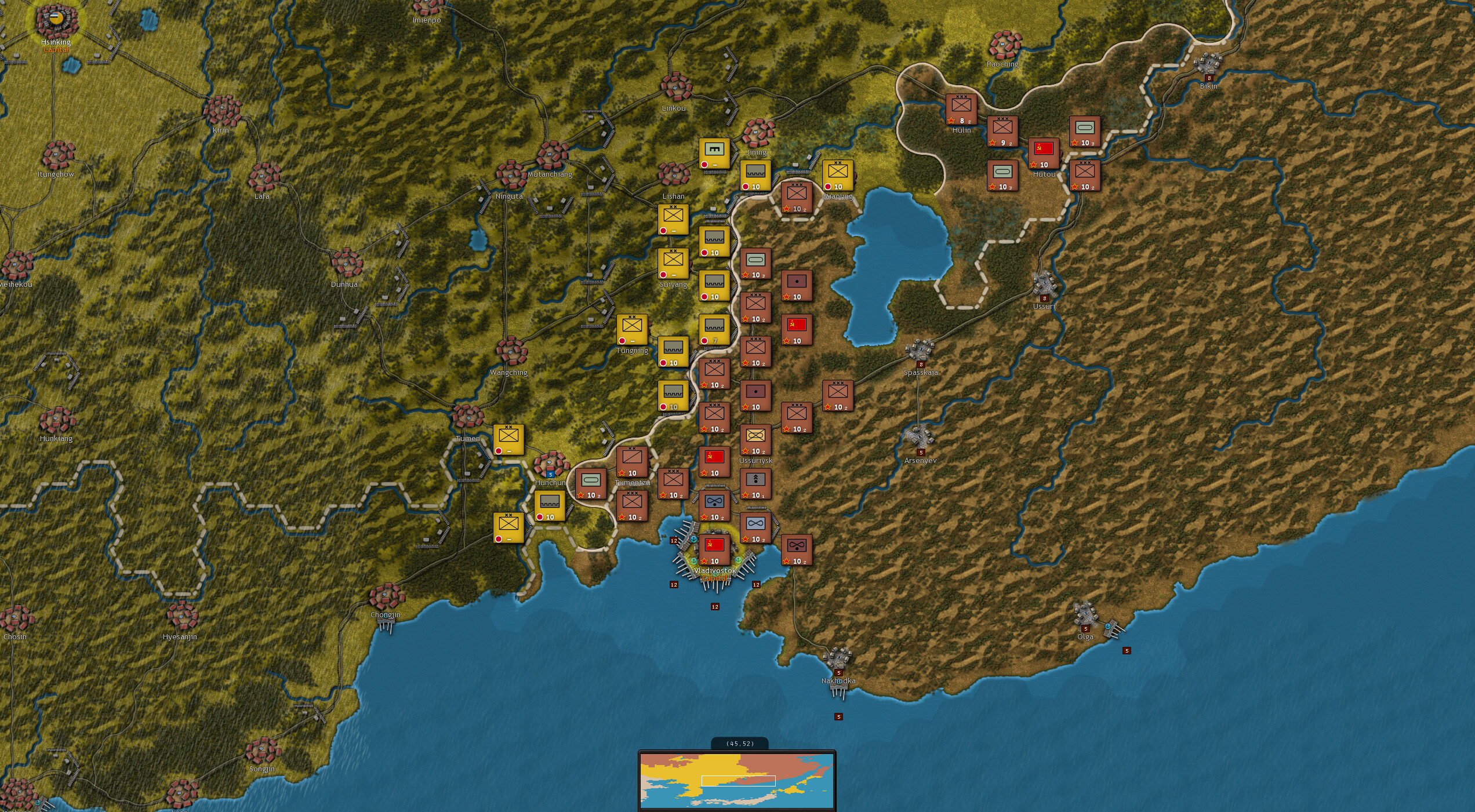
Hi everyone,
a new update has just been deployed.
v1.04.00
GAME ENGINE
- Fixed an Artillery undo move error after it initially fires (ruru)
- Fixed a scorecard error that was not excluding inactive nations from the Fighting Spirit (average) final overall score.
- Fixed a false 'SHATTERED' message when units were retreating (Tanaka).
- Fixed an AI combat error that would cause a CTD (Welk).
- Fixed an issue where map geo location was not being displayed during a DECISION event pause and map review.
- Fixed a rare left edge map scrolling error (Nginear).
- Fixed a supply calculation CTD error (Easter80).
- Fixed a unit name display error in the summary lists that sometimes displayed units in another language (The Orphan).
- Fixed an anti-aircraft combat sequence that would not display the combat losses of attacking aircraft (Das Licht).
- Naval units that pass through enemy units and lose strength leading to their destruction now provide a NM bonus to their opponent, e.g. similar to regular combat naval losses for when a unit is destroyed (Beriand).
- Recon flights with a reroute, will now properly spot along the re-route path (Scottydawg).
- WWI entrenching will now default to 3 sides.
- PBEM++ games now have RESEARCH and DIPLOMACY results (at the end of the turn) locked in with the same results no matter how often you potentially re-load the turn.
- Subs in silent mode will no longer be shown moving past your naval units during last turn replays (mdsmall).
EDITOR
- Fixed an Advanced Research sharing crash for Minors that should not have had the option enabled (Welk).
- Deployment Queue now available as an option in the Country Data screen.
1937 Marco Polo to Pearl Harbor
- Changed DE 25 quantity of deployed elite Chinese divisions to seven (Southern friend).
- Reduced Shantung artillery builds to zero (Southern friend).
- Reduced China and China minor countries build delays.
- Changed DE 64 (Shantung Surrender) trigger date by one month to smooth out MMP deduction (gamer78).
- Added descriptions for Japan and China Headquarters capabilities to the Strategy Guide (marnoerzob08).
- Lowered US Oil Embargo MPP cost to Japan.
- Corrected message grammar and added text in notes tab for the DE 619 popup.
- Added units for AI alternate CCP capitals should Yenan be captured.
- Increased China NM decrease should Chungking be captured.
- Corrected an error in a Japan Victory script and expanded the victory conditions by adding Yenan in Communist China as the sixth required city (Goodenough).
- Corrected Victory Scripts (DasLicht).
- Corrected the capital sound files to use the appropriate national anthems (DasLicht).
- Partisans can now leave their home territory.
1941 Day of Infamy
- Added a Unit script deploying a HQ in June 1942 to assist the Axis AI take the Dutch East Indies if it is struggling (kevini100).
1941 Day of Infamy and 1942 Summer of Decision
- Increased the size of Communist China by 1 hex to enable the deployment of units when Japan forces are threatening Yan'an (Mithrilotter).
- Partisans can now leave their home territory.
- Communist units in their bases are now Partisan units rather than Garrison units.
- The Japanese AI may now deploy a Garrison Unit at Makassar 61,87 (Mithrilotter).
- Amended Japan's starting positions in Manchuria, providing her with some more Garrisons in 1941 Day of Infamy, so as to prevent the AI from replacing Japanese units with Manchurian ones in key positions.
1945 Okinawa
- Added additional information about Kamikazes in the Strategy Guide (BoRearguard & Jack59).
1945 Operation Olympic
- Updated unit names.
Tue, 8 September 2026
Hi everyone,
a new update has just been deployed.
v1.04.00
GAME ENGINE
- Fixed an Artillery undo move error after it initially fires (ruru)
- Fixed a scorecard error that was not excluding inactive nations from the Fighting Spirit (average) final overall score.
- Fixed a false 'SHATTERED' message when units were retreating (Tanaka).
- Fixed an AI combat error that would cause a CTD (Welk).
- Fixed an issue where map geo location was not being displayed during a DECISION event pause and map review.
- Fixed a rare left edge map scrolling error (Nginear).
- Fixed a supply calculation CTD error (Easter80).
- Fixed a unit name display error in the summary lists that sometimes displayed units in another language (The Orphan).
- Fixed an anti-aircraft combat sequence that would not display the combat losses of attacking aircraft (Das Licht).
- Naval units that pass through enemy units and lose strength leading to their destruction now provide a NM bonus to their opponent, e.g. similar to regular combat naval losses for when a unit is destroyed (Beriand).
- Recon flights with a reroute, will now properly spot along the re-route path (Scottydawg).
- WWI entrenching will now default to 3 sides.
- PBEM++ games now have RESEARCH and DIPLOMACY results (at the end of the turn) locked in with the same results no matter how often you potentially re-load the turn.
- Subs in silent mode will no longer be shown moving past your naval units during last turn replays (mdsmall).
EDITOR
- Fixed an Advanced Research sharing crash for Minors that should not have had the option enabled (Welk).
- Deployment Queue now available as an option in the Country Data screen.
1937 Marco Polo to Pearl Harbor
- Changed DE 25 quantity of deployed elite Chinese divisions to seven (Southern friend).
- Reduced Shantung artillery builds to zero (Southern friend).
- Reduced China and China minor countries build delays.
- Changed DE 64 (Shantung Surrender) trigger date by one month to smooth out MMP deduction (gamer78).
- Added descriptions for Japan and China Headquarters capabilities to the Strategy Guide (marnoerzob08).
- Lowered US Oil Embargo MPP cost to Japan.
- Corrected message grammar and added text in notes tab for the DE 619 popup.
- Added units for AI alternate CCP capitals should Yenan be captured.
- Increased China NM decrease should Chungking be captured.
- Corrected an error in a Japan Victory script and expanded the victory conditions by adding Yenan in Communist China as the sixth required city (Goodenough).
- Corrected Victory Scripts (DasLicht).
- Corrected the capital sound files to use the appropriate national anthems (DasLicht).
- Partisans can now leave their home territory.
1941 Day of Infamy
- Added a Unit script deploying a HQ in June 1942 to assist the Axis AI take the Dutch East Indies if it is struggling (kevini100).
1941 Day of Infamy and 1942 Summer of Decision
- Increased the size of Communist China by 1 hex to enable the deployment of units when Japan forces are threatening Yan'an (Mithrilotter).
- Partisans can now leave their home territory.
- Communist units in their bases are now Partisan units rather than Garrison units.
- The Japanese AI may now deploy a Garrison Unit at Makassar 61,87 (Mithrilotter).
- Amended Japan's starting positions in Manchuria, providing her with some more Garrisons in 1941 Day of Infamy, so as to prevent the AI from replacing Japanese units with Manchurian ones in key positions.
1945 Okinawa
- Added additional information about Kamikazes in the Strategy Guide (BoRearguard & Jack59).
1945 Operation Olympic
- Updated unit names.
#40
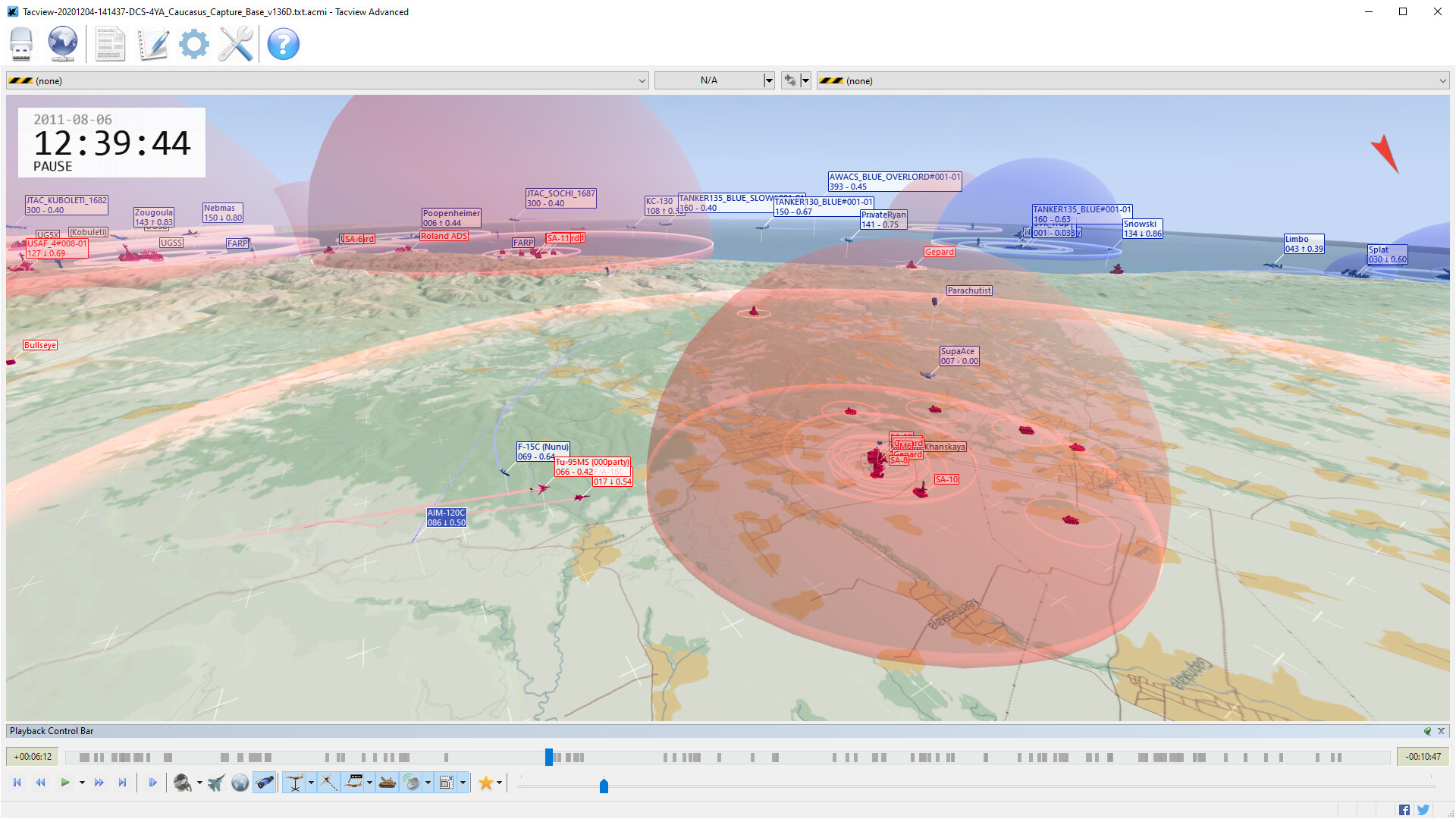
Tacview / Tacview 1.9.6 beta 8 is availa...
Last post by Asid - September 09, 2026, 12:47:43 AM
Tacview 1.9.6 beta 8 is available Now
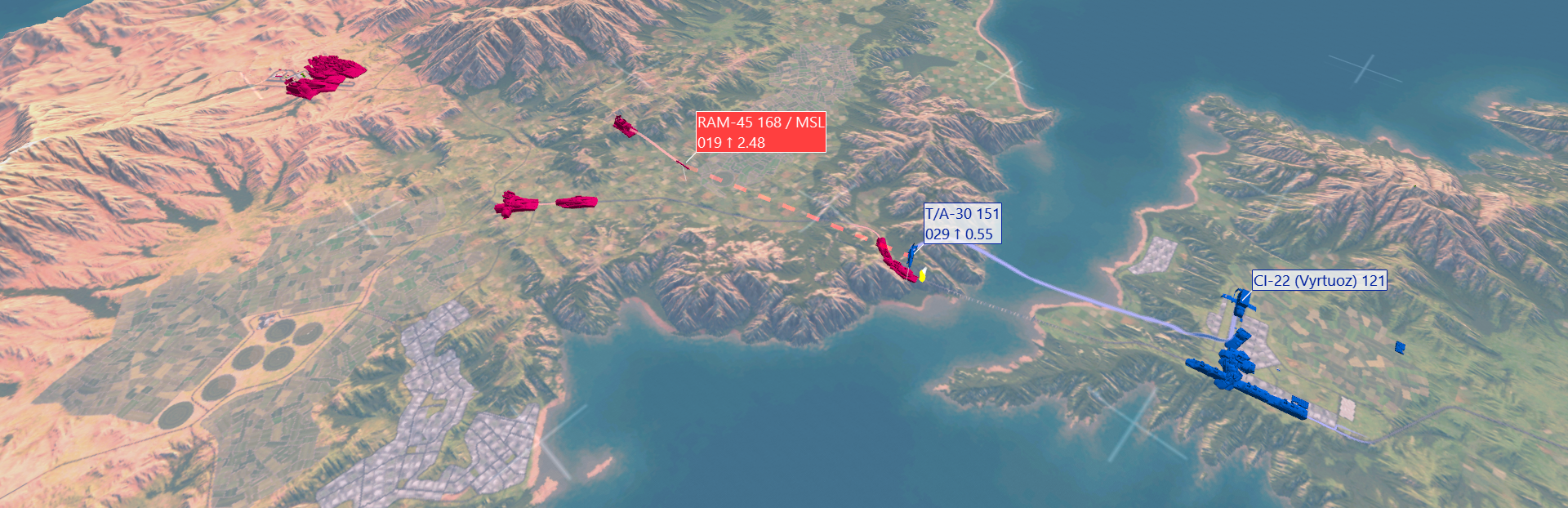
Download: HERE
- Release Date: September 7, 2026
- Operating System: Windows 32-bit / 64-bit
- File Size: 1.2 GB
Release notes
NEW FEATURES
- ADDED Support for ADS-B reception using the RTL-SDR Blog V4 (R828D).
- ADDED Relative distance, relative bearing, closure rate, and vertical separation charts.
- ADDED Aileron, elevator, and rudder telemetry support for DCS World.
- ADDED Aileron, elevator, and rudder telemetry support for X-Plane.
- ADDED Helicopter mixed units, such as imperial units with distances in kilometers.
- ADDED Option to display walls for all objects.
- ADDED Aircraft Carrier as a separate object type in the Add/Edit Object dialog.
- ADDED Option for wider bullseye ring spacing.
- ADDED Add-on to calculate the distance between two geographic points.
- ADDED Ctrl+Alt+F1 through Ctrl+Alt+F8 shortcuts to mute media windows.
- ADDED Several missing C++ and C# SDK functions, including Telemetry.Save().
- ADDED DCS2ACMI option to export DCS World elevation data for Tacview 2.
- ADDED Latest official 3D model and database for Nuclear Option.
IMPROVEMENTS
- IMPROVED Frame rate when playing back very large unoptimized ACMI files.
- IMPROVED Support for Microsoft Flight Simulator 2024.
- IMPROVED ADS-B database to version 2025-08.
- IMPROVED Pilot names are now displayed only after boarding their aircraft.
- IMPROVED Chart time selection and automatic scrolling behavior.
FIXES
- FIXED BMS 4.38 DTC INI files not being displayed.
- FIXED Joysticks not working anymore with remote controls.
- FIXED Quotes and commas not being properly escaped in CSV telemetry exports.
- FIXED DCS World real-time telemetry with password authentication was not working with Tacview 2.
Restrictions
To run a beta version, you need a product key. Feel free to have a look at the features comparison to know which edition is the best for you if you are interested in buying Tacview.
Please note that even if we are doing our best to produce a high quality product, beta versions usually contains known and unknown bugs, may crash, or have some features disabled because of work in progress. This is why, it is suggested to download and install beta versions alongside the latest official release (not over it). That way, in case of problem, you can simple launch the latest stable version to continue your work...